
Milan VIP Shopping & Fashion Tour
VIP Milan shopping experience with personal stylist. Explore luxury boutiques, hidden ateliers & fashion district…
Discover More →
On International Women's Day, Milan opens doors that are usually only half-ajar. Museums, walking tours, street murals, and library readings reveal the women who shaped the city — from Renaissance patrons to 20th-century resistance fighters....
Every city has a mythology. Milan’s is often told through industry, fashion, and design — a story of ambition in sharp tailoring. But there is another Milan, quieter and more radical, written by the women who shaped it from the inside. Alchemists and aristocrats. Resistance fighters and Renaissance hosts. Artists who were never given gallery walls and scientists whose names were borrowed by the men beside them.
On March 8th, International Women’s Day, Milan opens doors that are usually only half-ajar. Museums offer free admission and guided tours built entirely around female narratives. Walking itineraries trace the footsteps of women who changed the city’s course. Street murals become open-air monuments to lives that textbooks overlooked.
This is not a token celebration. It’s a chance to see the city through an entirely different lens — and to discover that the most fascinating stories in Milan have been hiding in plain sight.
The Pinacoteca Ambrosiana is one of Milan’s oldest and most intimate museums — a place where Caravaggio‘s Basket of Fruit hangs with the casual confidence of a masterpiece that knows its worth. But on the weekend of March 8th, the Ambrosiana offers something rarer than its permanent collection: a guided tour that rereads the entire gallery through the lives of the women connected to it.
“Le donne dell’Ambrosiana” is not a feminist rereading imposed on old canvases. It’s a restoration of context. The tour reveals patrons, muses, and creators who were always part of the story but rarely centered in it — women whose influence shaped what was collected, what was commissioned, and what survived.
Women enter free for the entire day on Sunday, with access not only to the Pinacoteca but also to the Cripta di San Sepolcro — the atmospheric underground chapel beneath the church of the same name, one of Milan’s most evocative hidden spaces. The crypt dates to the 11th century and feels like stepping into a city beneath the city, all raw stone and silence.
The Ambrosiana sits in the heart of Milan’s historic center, a five-minute walk from the Duomo. The guided tours tend to fill quickly around this weekend, so arriving early — or booking in advance — is wise. Give yourself time to linger. The Ambrosiana rewards slowness.
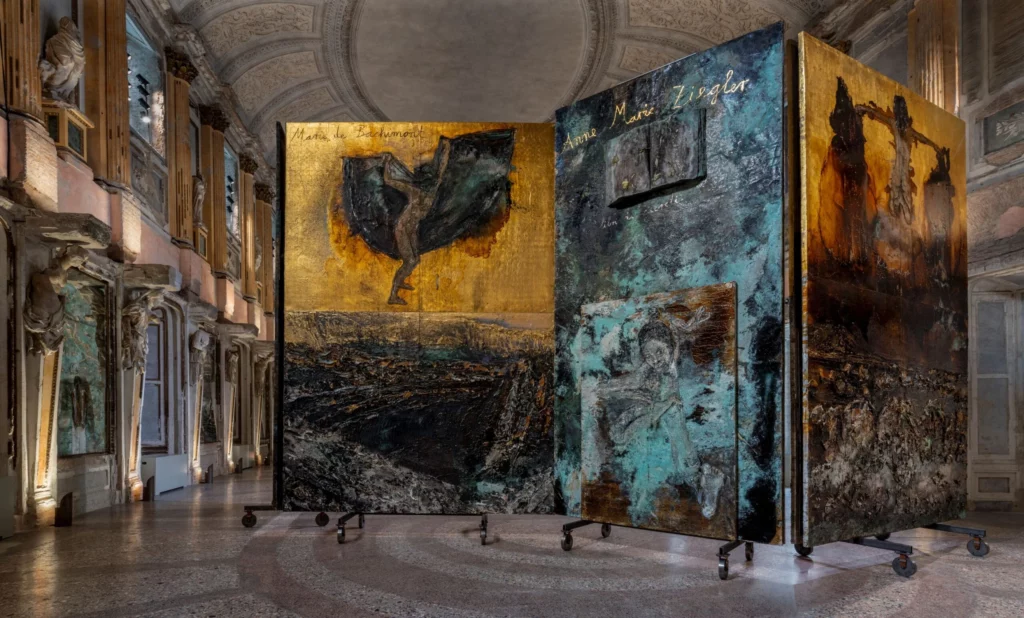
Anselm Kiefer makes art that feels like archaeology — vast, layered, heavy with the weight of buried histories. His exhibition “Le Alchimiste” at Palazzo Reale is, on the surface, a show about alchemy. But look closer and it becomes something far more specific: a monument to the women alchemists who were erased from the history of science.
The names alone are worth the visit. Isabella Cortese, the 16th-century Venetian who published one of the first books on chemical experimentation. Maria la Giudea — Mary the Jewess — credited with inventing the bain-marie still used in every kitchen today. Marie Meurdrac, who in 1666 wrote a chemistry manual and had to argue, in her own preface, for the right of women to practice science at all. Rebecca Vaughan. Mary Anne Atwood. Women who worked with fire and mercury and transformation, in an age when transformation was considered dangerous if a woman was the one doing it.
Kiefer’s monumental canvases — lead, ash, gold leaf, dried flowers — give these women the scale they were denied in life. The guided tours offered on March 8th walk visitors through each figure’s story, connecting the alchemical symbolism in the art to the very real lives of the women it honors.
This is not a gentle exhibition. Kiefer’s work demands physical space and emotional attention. But for anyone interested in the intersection of art, science, and feminist history, it is one of the most powerful things on view in Milan right now.
If gallery walls feel too confining for a March afternoon, there is another way to encounter Milan’s feminine history — on foot, in the open air, following the itinerary known as “La città delle donne.”
This guided urban walk moves through the city’s layered past with women as its compass points. Renaissance salons where female intellectuals hosted conversations that shaped Milanese thought. Quiet courtyards that witnessed romantic revolutions. The homes and haunts of women who were controversial in their time and visionary in hindsight — figures who navigated a city built by and for men, and remade parts of it in their own image.
The beauty of a walking tour like this is that it changes the city around you. Streets you’ve crossed a hundred times suddenly hold a story you never knew. A palazzo facade becomes a biography. A street name becomes a question: who was she, and why don’t we talk about her more?
Milan reveals itself differently when you know who to look for.
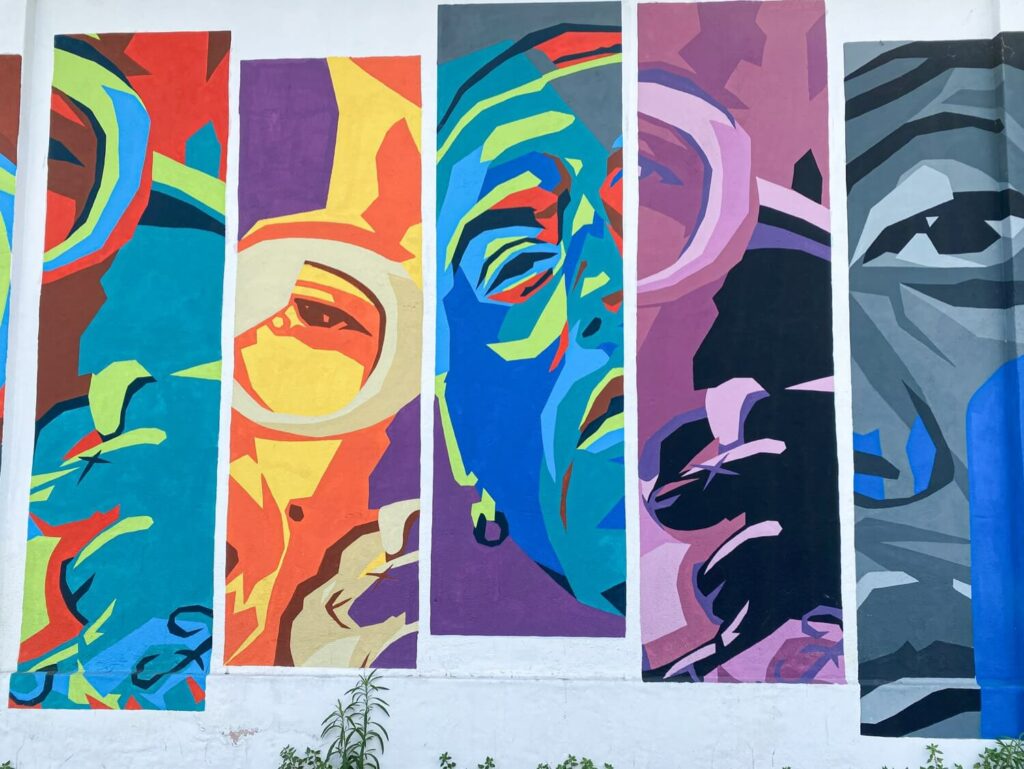
The Ortica is one of those Milan neighborhoods that most visitors never reach — a former working-class district east of the center, where industrial heritage meets a street art movement that has turned entire building facades into public monuments.
The mural “Alle donne del 900” is its centerpiece: a sweeping, multi-wall tribute to the women of the 20th century. Not abstract symbols of womanhood, but specific faces and specific lives — resistance fighters, scientists, artists, activists, mothers, workers. Women who held the century together while it tried to tear itself apart.
Walking to the Ortica to see this mural is itself part of the experience. The journey takes you through a Milan that doesn’t appear in travel magazines — quieter, grittier, more honest. You pass railway bridges and local bars and small parks where the neighborhood still feels like a village. And then, suddenly, an entire building wall explodes into color and memory.
Guided visits on March 8th take you through the mural’s stories step by step — who each woman was, why she matters, and how the artists chose to remember her. It is street art at its most purposeful: not decoration, but testimony.

Milan’s public libraries are among its most underrated cultural spaces — and on March 8th, they come alive with a program of readings, conversations, book presentations, and workshops dedicated to women’s voices and stories.
Across the city’s library system, you’ll find events for adults and children alike: discussions about female writers who changed Italian literature, workshops on themes of emancipation and identity, and intimate readings that bring forgotten voices back into the room. It’s a quieter, more reflective way to mark the day — less spectacle, more substance.
There’s something fitting about celebrating women’s history in a library. These are spaces built on the premise that every story matters and every voice deserves to be preserved. On March 8th, Milan’s libraries make that promise specific.
The beauty of Women’s Day in Milan is that it isn’t a single event — it’s a constellation. You could spend the morning at the Ambrosiana, walk to Palazzo Reale after lunch, and end the afternoon following the urban itinerary through streets you thought you already knew. Or you could take the quieter route: a library reading in the morning, the Ortica murals in the afternoon, dinner in a neighborhood you’d never otherwise visit.
However you shape the day, what stays with you is not the program — it’s the shift in perspective. Milan, seen through the women who made it, is a different city. More complex, more surprising, more alive.
And once you’ve seen it that way, you can’t quite unsee it.
Is March 8th a public holiday in Italy?
No, it’s not an official public holiday, but museums, cultural institutions, and many businesses participate with special events, free admissions, and dedicated programming throughout the day.
Do I need to book guided tours in advance?
It’s strongly recommended. Tours at the Pinacoteca Ambrosiana and Palazzo Reale fill up quickly around March 8th. Check each venue’s website for availability and reservation details.
Is the free admission at the Ambrosiana only for women?
Yes, women enter the Pinacoteca Ambrosiana free of charge for the entire day on Sunday, March 8th. Men pay the standard admission. The Cripta di San Sepolcro is included in the free access.
How do I reach the Ortica murals?
The Ortica neighborhood is east of Milan’s center. The easiest way to get there is via the Lambrate or Ortica train stations. The walk from the station to the main murals takes about ten minutes. Guided tours gather at set meeting points — check local event listings for details.
Can I see all the events in one day?
You can comfortably fit two or three highlights into a single day. The Ambrosiana and Palazzo Reale are within walking distance of each other in the city center, so combining those with the urban itinerary works well. The Ortica murals require a separate trip east.
Are the events available in English?
Most guided tours at major venues like Palazzo Reale and the Ambrosiana offer English-language options, but availability varies. Private guided tours can be arranged in English with advance booking.
VIP Milan shopping experience with personal stylist. Explore luxury boutiques, hidden ateliers & fashion district…
Discover More →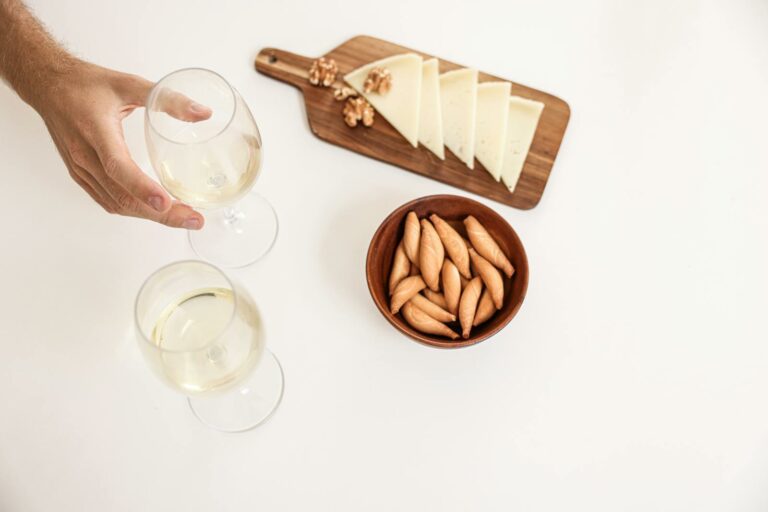
Milan food market tour with Italian breakfast, espresso tasting & traditional aperitivo. Experience authentic Milanese…
Discover More →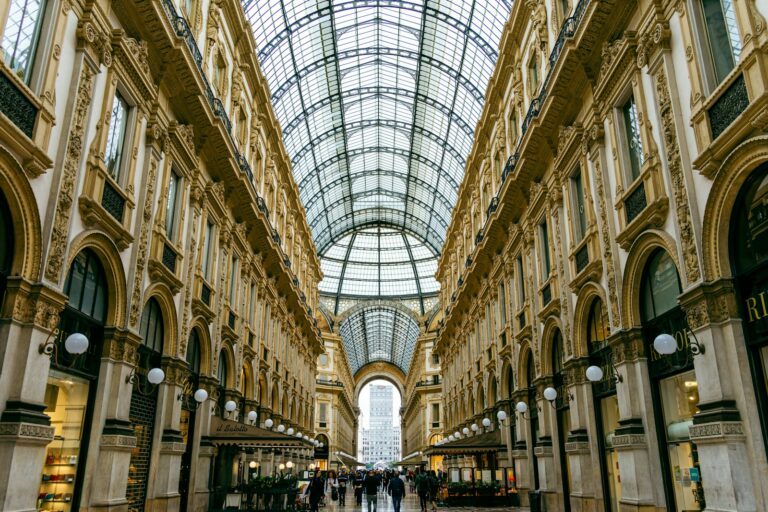
Family-friendly Milan walking tour from La Scala to Sforza Castle. Discover landmarks, stories & secrets…
Discover More →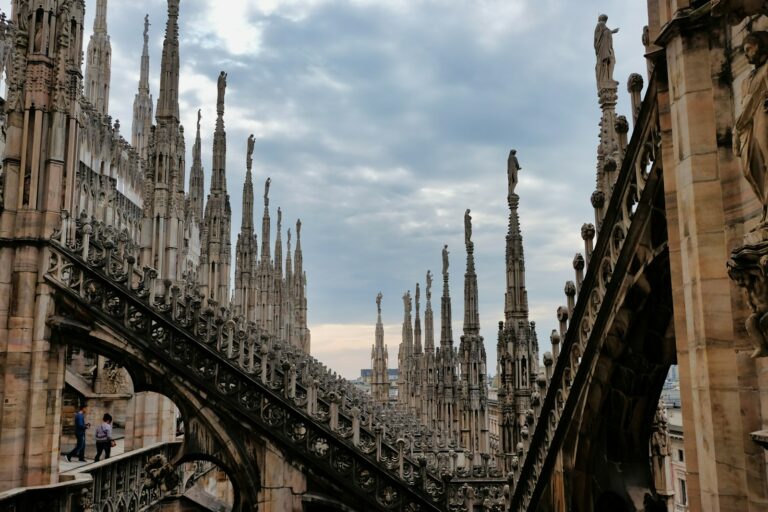
Skip-the-line Milan Duomo tour with rooftop terrace access. Explore Gothic architecture & enjoy panoramic city…
Discover More →