
Venice Food Tour: the Bacari Experience
Authentic Venice food tour through Rialto Market & traditional bacari. Taste cicchetti, local wines &…
Discover More →
Discover Naples and the Amalfi Coast in spring: hike the Path of the Gods, explore Ravello's blooming gardens, and stay at boutique hotels before summer crowds....
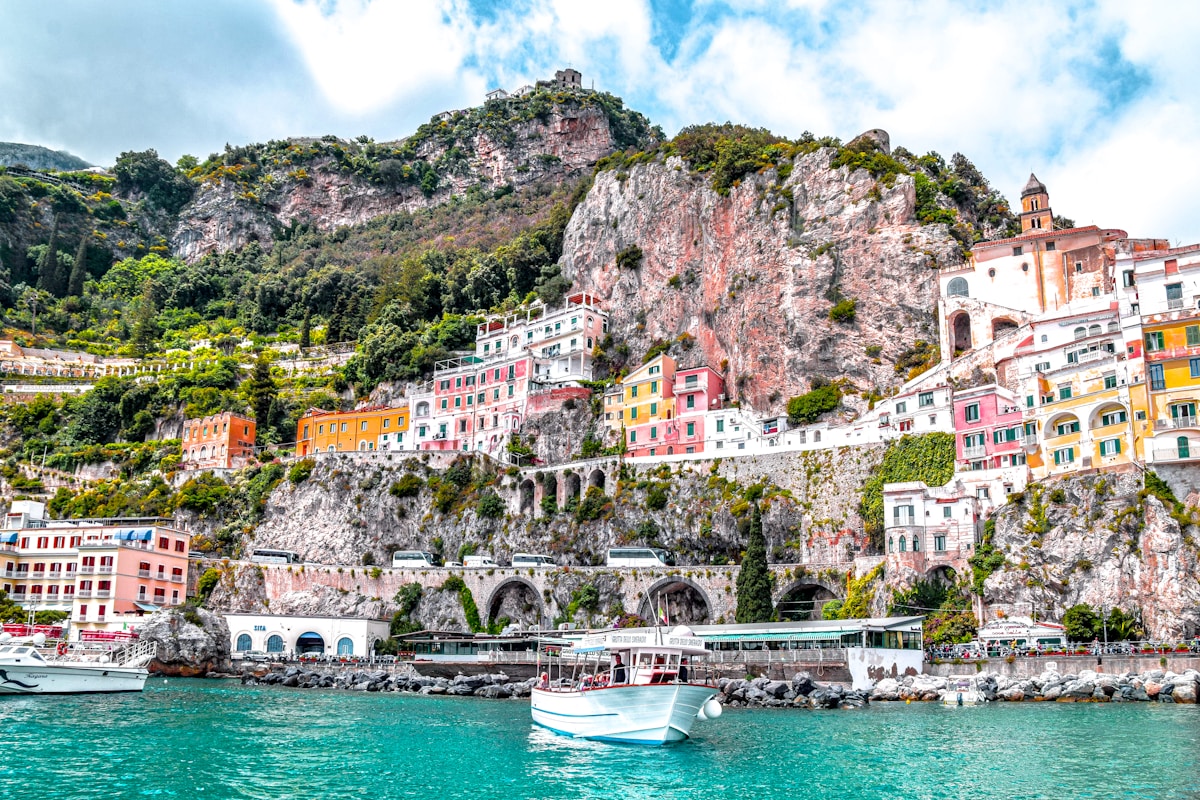
There is a moment each spring when the Amalfi Coast sheds its winter stillness and begins to breathe again. It happens quietly — sometime in late March or early April — when the lemon groves along the terraced hillsides burst into fragrant blossom, the wisteria drapes itself over ancient pergolas, and the sea shifts from its moody winter grey to that impossible, almost artificial turquoise. The tourists have not yet arrived in force. The light is soft. The coast belongs, briefly, to those who know when to come.
This is the Amalfi Coast in spring at its most seductive: temperatures hovering between 18 and 24 degrees, wildflowers carpeting every cliff path, and hotel terraces that feel like private balconies rather than crowded stages. Naples, too, transforms — its piazzas alive with the energy of outdoor dining, its markets overflowing with violet artichokes and the season’s first San Marzano tomatoes. For those who appreciate luxury without spectacle, this shoulder season is not a compromise. It is the point.
What follows is not a guidebook itinerary. It is an insider’s map to experiencing the Bay of Naples and the Costiera Amalfitana the way they deserve to be experienced — slowly, deeply, and with a glass of something cold in hand.
If you do only one thing on the Amalfi Coast in spring, make it the Sentiero degli Dei — the Path of the Gods. This seven-kilometre trail, carved into the cliffs 600 metres above the sea between the hamlet of Bomerano and the village of Nocelle, is often called one of Europe’s finest coastal walks. In summer, the trail bakes under a relentless sun and teems with hikers. In April and May, it is something else entirely: cool, fragrant, and almost meditative.
Spring transforms the path into a botanical corridor. Wild orchids emerge from crevices in the rock. Rosemary and thyme release their scent as you brush past. The yellow blooms of broom — ginestra — light up entire cliffsides like signal fires. Below you, the sea stretches to the horizon, punctuated by the silhouettes of Li Galli islands, those rocky outcrops once owned by Rudolf Nureyev. The scale is humbling. There are moments — rounding a corner to find the entire sweep of the coast laid out beneath you, with nothing but birdsong and wind — that genuinely deserve the word transcendent.
The hike takes roughly three to four hours at a comfortable pace. Start from Bomerano (reachable by SITA bus from Amalfi) and walk westward toward Nocelle, where a local bus descends the switchbacks to Positano. The trail is well-marked but exposed in places — sturdy footwear is non-negotiable, and you will want at least a litre of water. For those who prefer a guided experience, local outfitters such as Cartotrekking pair the walk with botanical expertise and stories of the shepherds who once used these paths as highways between villages.
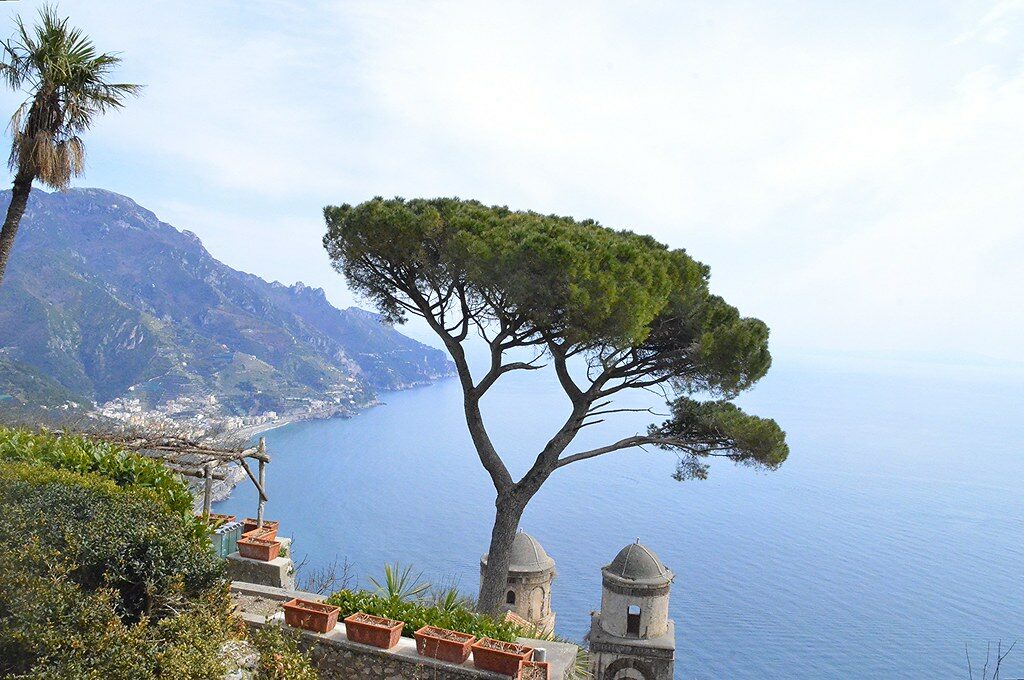
Perched 350 metres above the sea, Ravello has always attracted a certain kind of visitor — one drawn to contemplation rather than commotion. Wagner composed here. Gore Vidal wrote here for decades. Greta Garbo came to disappear. In spring, the town’s famous gardens reach their peak, and the reason for all that artistic devotion becomes immediately, viscerally clear.
Villa Cimbrone is the essential pilgrimage. A winding path through the gardens — past rose beds, ancient statuary, and a cloister draped in climbing jasmine — leads to the Terrazza dell’Infinito, the Terrace of Infinity. It is a ledge at the edge of the world, lined with eighteenth-century marble busts, gazing out over a panorama so vast and beautiful that it borders on the absurd. In spring, with wisteria framing the view and the afternoon light turning the sea to hammered gold, this is arguably the single most beautiful vantage point on the Italian coast. The gardens reopen mid-March each year, and visiting early in the season means you may have the terrace nearly to yourself.
Equally compelling is Villa Rufolo, whose cascading gardens inspired Wagner’s garden of Klingsor in Parsifal. The Norman-era tower offers a different perspective — one of layered history rather than pure spectacle. Villa Rufolo is also home to the stage for the Ravello Festival, the annual summer music programme that begins in late June. Come in spring and you catch the gardens at their most lush, with the anticipation of the festival season adding a quiet energy to the town.
For those staying overnight, Ravello offers two of the coast’s finest hotels. Belmond Hotel Caruso, set in an eleventh-century palazzo, reopens each year in mid-April — its infinity pool suspended above the valley is one of the most photographed in the world. Palazzo Avino, a twelfth-century noble residence turned five-star hotel, offers a more intimate atmosphere, with hand-painted tiles, a Michelin-starred restaurant, and views that make you forget every other hotel you have ever stayed in.
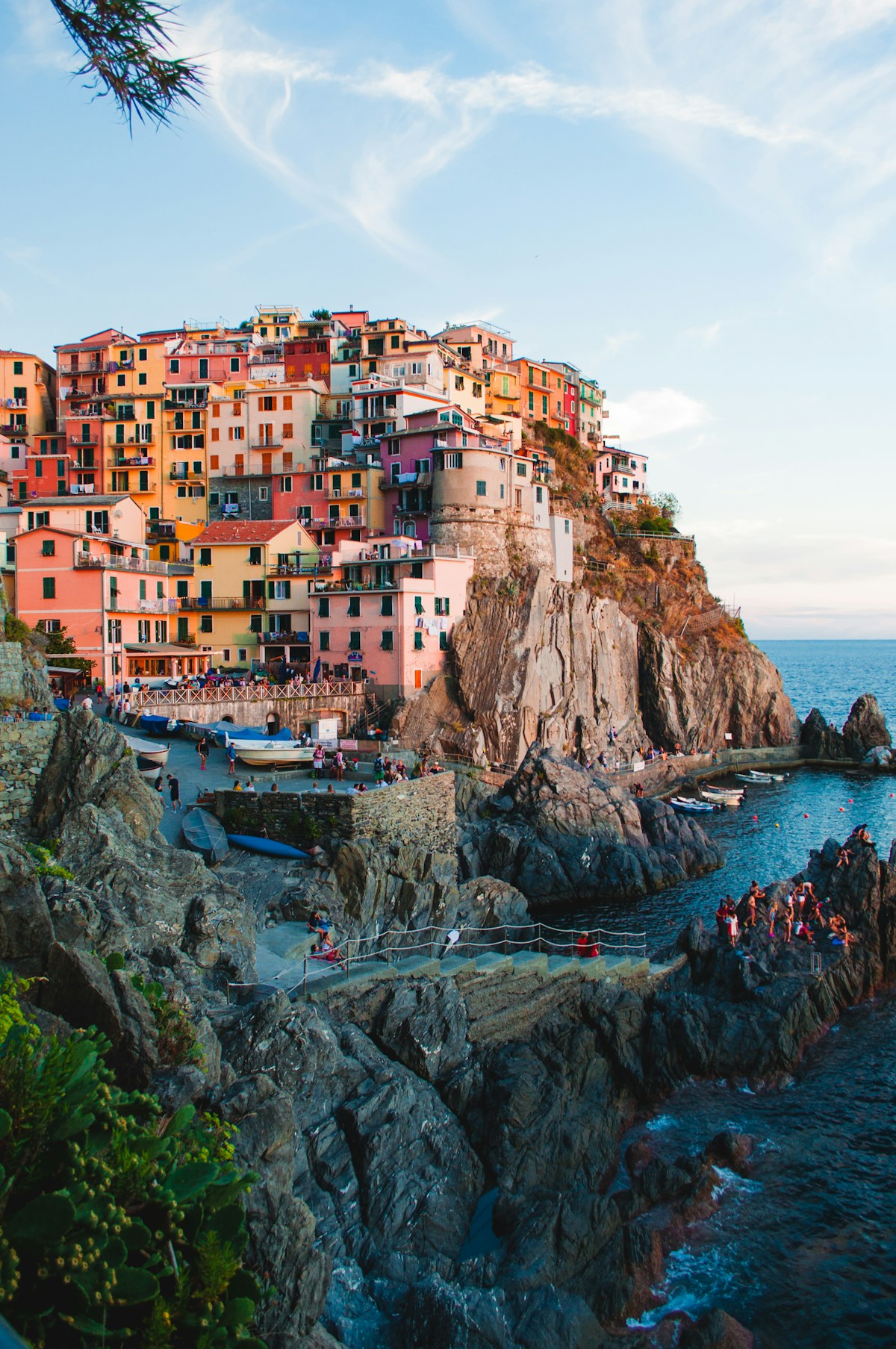
Positano in August is a beautiful problem — too many people loving the same narrow streets, the same pastel-stacked houses, the same crescent of dark sand. Positano in April is a revelation. The boutiques along Via dei Mulini are open but unhurried. The Spiaggia Grande has room to breathe. The light, still low and golden, paints the town in colours that midsummer glare washes out.
Le Sirenuse remains the defining luxury address here — and arguably anywhere on the Amalfi Coast. The Sersale family has run this white-walled palazzo since 1951, and every detail reflects a lifetime of refined taste: the museum-quality art collection, the hand-picked antiques, the Michelin-starred La Sponda restaurant glowing under four hundred candles each evening. Spring is the time to book the corner suites with the wraparound terraces — the ones that look directly down onto the church dome and out across the bay. And do not miss an evening at Franco’s Bar, the hotel’s al fresco cocktail terrace named after the late Franco Sersale. No reservations, no food menu — just impeccable drinks, a vinyl-era soundtrack, and one of the finest sunset perches in southern Italy.
In nearby Amalfi town, Hotel Santa Caterina is the grande dame — an Art Nouveau villa carved into the cliff, with a glass elevator descending to a private beach club and saltwater pool. Spring is when the hotel’s Glicine Restaurant, awarded a Michelin star, celebrates the season’s first ingredients: tender artichoke hearts, raw prawns from the gulf, and pasta perfumed with wild fennel. The beach clubs along the coast begin their soft openings in April, and there is something particularly satisfying about being among the first to unfurl a towel on a freshly raked sunbed, the summer rush still weeks away.
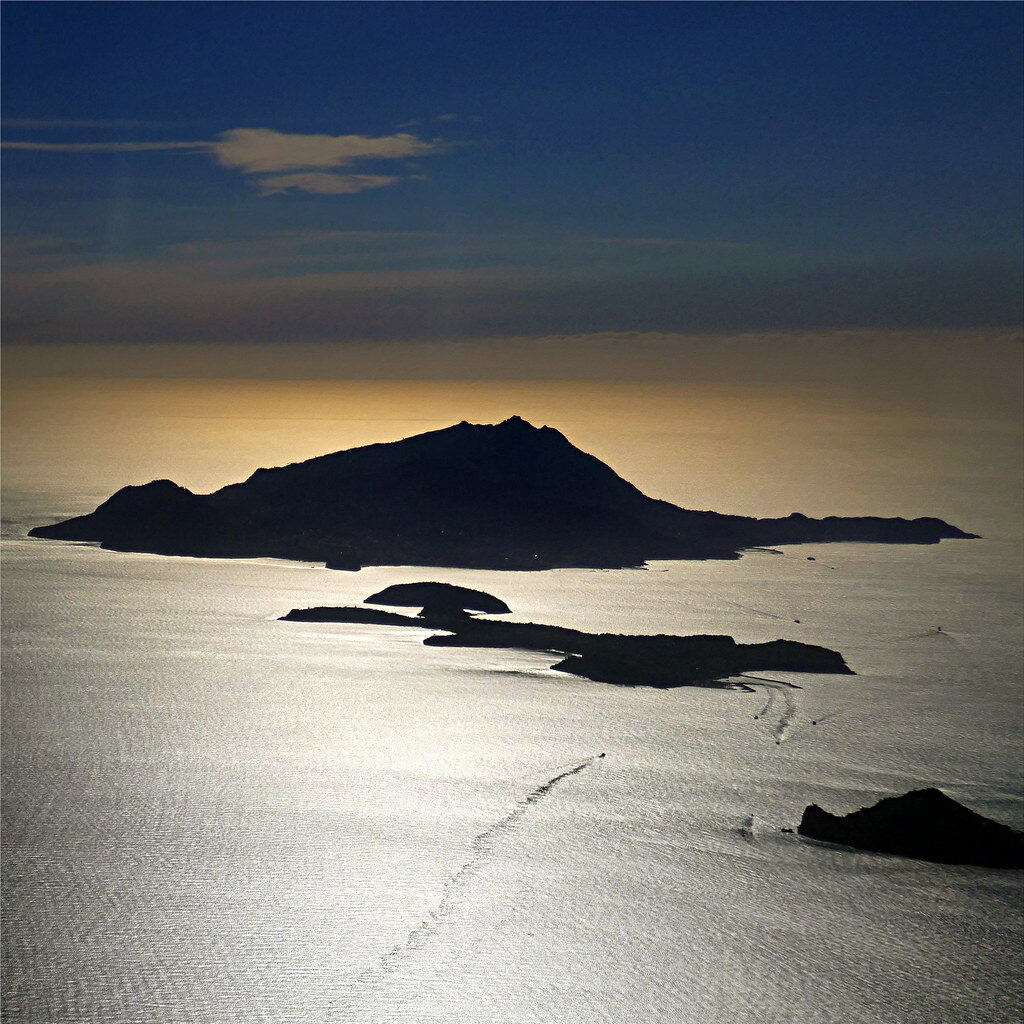
While Capri and Ischia command the attention, Procida — the smallest inhabited island in the Bay of Naples — quietly goes about being the most authentic. Named Italy’s Capital of Culture in 2022 under the theme “La cultura non isola” (culture does not isolate), Procida used that year to invest in its artistic infrastructure without surrendering its soul. The result is an island that feels simultaneously discovered and untouched.
The heart of Procida is Marina Corricella, a seventeenth-century fishing harbour so photogenic it served as the backdrop for the film Il Postino. Reach it via a steep staircase from the Terra Murata hilltop — the descent reveals the village in stages, each turn framing a new composition of arched doorways, sun-bleached nets, and houses painted in faded pink, ochre, and sky blue. In spring, the harbour is still the domain of working fishermen rather than tour groups. Pull up a chair at one of the waterfront trattorias, order whatever was caught that morning, and watch the boats come and go.
Procida island in spring is perfect for a day trip from Naples — ferries operated by SNAV and Medmar make the crossing in under an hour from Molo Beverello. But staying overnight unlocks another dimension. Small boutique hotels like La Casa sul Mare offer rooms with private terraces overlooking the harbour, and the evenings — when the day-trippers have departed and the island exhales — are worth the stay alone. Walk the quiet streets of the Terra Murata at dusk, the Palazzo d’Avalos looming above, and you will understand why insiders have kept this island to themselves for so long.
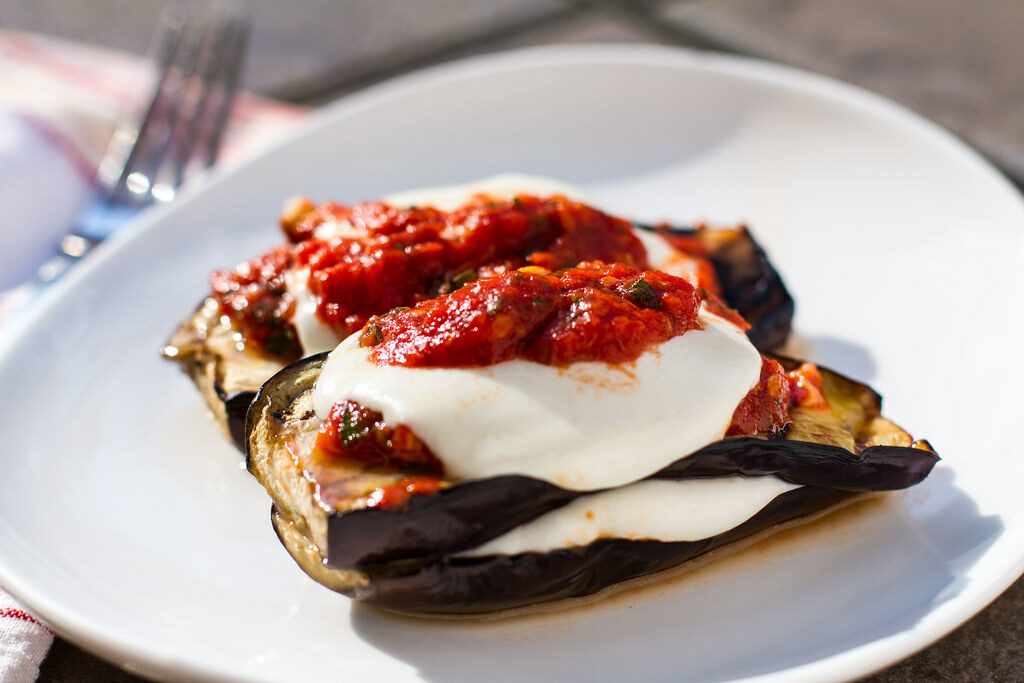
Neapolitan cuisine needs no introduction, but it does need a season — and spring is it. The markets of Naples erupt with violet carciofi (artichokes), the first tender courgettes with their blossoms still attached, wild asparagus foraged from the hillsides, and the Amalfi lemons so fat and aromatic they perfume an entire room. This is when the cooking of Campania is at its most vibrant and least predictable.
For the definitive high-end experience, Don Alfonso 1890 in Sant’Agata sui Due Golfi — perched on the ridge between the Bay of Naples and the Bay of Salerno — has held Michelin stars since 1980. The Iaccarino family sources from their own organic farm, Le Peracciole, and the spring tasting menu is a masterclass in what happens when world-class technique meets produce picked hours earlier. Expect dishes built around raw crudi, lemon-cured amberjack, and pasta with sea urchin so sweet it dissolves on the tongue.
In Naples proper, the dining scene has evolved far beyond pizza — though a margherita at Da Matteo remains a rite of passage. The city’s constellation of serious restaurants now includes addresses like George Restaurant at the Grand Hotel Parker’s, where contemporary Neapolitan cuisine meets panoramic terrace dining. Down in the historic centre, trattorias in the Quartieri Spagnoli serve the season’s bounty with zero pretension: frittura di paranza (mixed fried seafood), spaghetti alle vongole with clams from the gulf, and pastiera — the ricotta and wheat cake that is Naples’ quintessential Easter dessert.
And do not overlook a morning at the Museo Archeologico Nazionale di Napoli (MANN), home to the world’s finest collection of Greco-Roman antiquities, followed by lunch in the surrounding streets. The combination of frescoes from Pompeii and a plate of handmade paccheri at a family-run trattoria is the kind of pairing that defines a Naples trip.
When to go: The sweet spot is mid-April through late May. Early April can still bring rain showers, but they pass quickly and keep the landscapes impossibly green. By late May, temperatures reach the mid-twenties, the sea is warm enough for swimming, and the summer crowds have not yet descended.
Getting around: Hire a private driver for the coastal road — the SS163 between Sorrento and Amalfi is thrilling but demands concentration, and you will want to be the one gazing out of the window, not gripping the steering wheel. For the islands, fast ferries run regularly from Naples’ Molo Beverello and from Amalfi and Positano. Spring schedules are slightly reduced compared to summer, so check Coop Sant’Andrea and Travelmar timetables in advance.
What to pack: Layers are essential. Mornings can be cool, especially in the hills, but midday sun is strong. Bring comfortable walking shoes for the Path of the Gods and Ravello’s cobblestones, a light jacket for evening terraces, and something elegant for the restaurants that still expect it — Le Sirenuse’s La Sponda and Don Alfonso among them.
Book early: Spring is increasingly recognised as the coast’s finest season, and the best suites at properties like Le Sirenuse and Belmond Hotel Caruso sell out months in advance. Reserve dining at Don Alfonso and Hotel Santa Caterina’s Glicine at least two weeks ahead.
When is the best time to visit the Amalfi Coast to avoid crowds?
Mid-April through late May offers the ideal balance: warm weather, blooming gardens, and a fraction of the summer foot traffic. Early October is the other shoulder season, but spring wins for garden lovers and hikers thanks to wildflower season and longer daylight hours.
How many days do you need for Naples and the Amalfi Coast?
A minimum of five to six days allows for two days in Naples (including a day trip to Pompeii), two to three days along the Amalfi Coast (Positano, Amalfi, and Ravello), and a day trip to Procida or Capri. For a more relaxed pace that includes the Path of the Gods hike and leisurely dining, plan for seven to nine days.
Is the Path of the Gods hike worth doing in spring?
Absolutely — spring is the best season for it. Temperatures are comfortable for hiking (16 to 22 degrees), the trail is lined with wildflowers and aromatic herbs, and you will encounter far fewer hikers than in the June-to-September peak. Visibility is generally excellent, offering panoramic views of the coast and the Li Galli islands.
What should I pack for the Amalfi Coast in April and May?
Pack light layers, a waterproof jacket for occasional spring showers, sturdy walking shoes, sunscreen, and a sun hat. Evenings can be cool, so bring a light blazer or pashmina. Luxury dining venues maintain smart-casual dress codes — no trainers or shorts at establishments like Le Sirenuse or Palazzo Avino.
Are Ravello’s gardens better in spring or summer?
Spring is the superior season for Ravello’s gardens. Villa Cimbrone’s roses, wisteria, and jasmine are at their peak in April and May, and the softer light enhances the famous Terrace of Infinity views. In summer, heat and larger crowds diminish the experience. Villa Cimbrone reopens in mid-March, making spring visitors among the first to enjoy the restored gardens each year.
How expensive is a luxury trip to the Amalfi Coast in spring?
Spring rates are typically 15 to 30 percent lower than peak summer prices. Expect to pay between 700 and 1,500 euros per night for a sea-view suite at top hotels like Le Sirenuse or Belmond Hotel Caruso. Michelin-starred tasting menus range from 120 to 200 euros per person. A well-planned seven-day luxury trip for two, including hotels, dining, transfers, and excursions, typically falls between 8,000 and 15,000 euros — significantly less than the same itinerary in July or August.
Is Procida island worth visiting in spring?
Very much so. Procida in spring is uncrowded, authentic, and strikingly beautiful. The pastel houses of Marina Corricella are at their most photogenic in the soft spring light, the waterfront restaurants serve the freshest catch without summer wait times, and the island retains the fishing-village atmosphere that drew filmmakers and artists in the first place. It is easily reached by ferry from Naples in under an hour.
Authentic Venice food tour through Rialto Market & traditional bacari. Taste cicchetti, local wines &…
Discover More →
Live an unforgettable culinary experience at our chef's home! Enjoy a private cooking class and…
Discover More →
Immersive walking tour through Rome's iconic landmarks with expert guide. Discover the Colosseum, Pantheon, Trevi…
Discover More →
An 8-hour journey through iconic villages, hidden coves, and the sparkling waters of Italy’s Amalfi…
Discover More →