
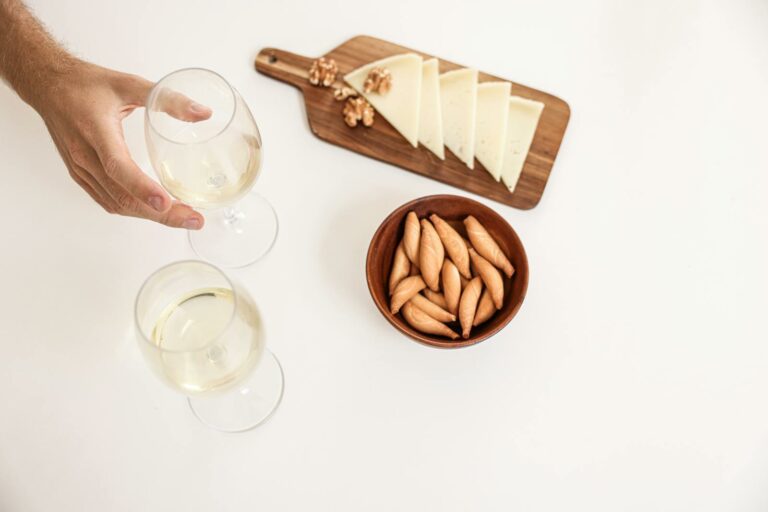
Milan Food Market & Aperitivo
Milan food market tour with Italian breakfast, espresso tasting & traditional aperitivo. Experience authentic Milanese…
Discover More →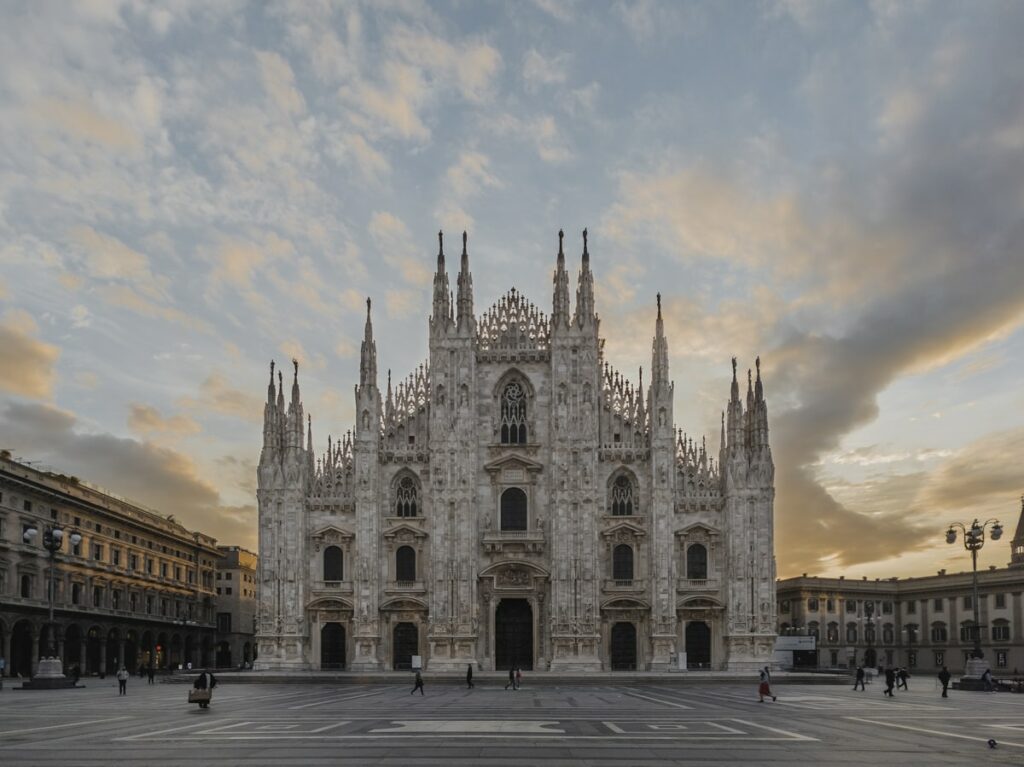
There is a moment, sometime in late March, when Milan sheds its grey winter armour and becomes an entirely different city. The light shifts. Café tables appear on cobblestoned pavements that were bare the week before. Wisteria begins its slow conquest of courtyard walls in Brera, and the air carries something that has nothing to…...
There is a moment, sometime in late March, when Milan sheds its grey winter armour and becomes an entirely different city. The light shifts. Café tables appear on cobblestoned pavements that were bare the week before. Wisteria begins its slow conquest of courtyard walls in Brera, and the air carries something that has nothing to do with fashion or finance — it carries the unmistakable scent of a city waking up.
Spring in Milan is not a gentle transition. It is an event. The terraces of the Navigli fill overnight. Design studios throw open their doors. The botanical gardens, shuttered since autumn, reveal themselves again. For those who know the city only through its winter greys or its summer crowds, this is the season that reveals Milan’s true character — confident, creative, and quietly spectacular.
And then, in April, something extraordinary happens: the entire global design world descends on the city for a single week that reshapes how we think about the spaces we inhabit. This is Milan in spring — and there is nothing else quite like it.
The 64th edition of Salone del Mobile runs April 21 to 26, 2026, at Fiera Milano Rho. The numbers alone command attention: over 1,900 exhibitors from 32 countries, spread across 169,000 square metres of exhibition space. This is the world’s most influential furniture and design fair, and its gravitational pull draws architects, collectors, and creative directors from every continent.
But the real magic of Milan Design Week happens outside the fairgrounds. Fuorisalone — the sprawling, unofficial, citywide constellation of off-fair events — transforms Milan into a living gallery. Installations appear in 16th-century courtyards. Lighting prototypes glow inside former industrial warehouses. Sound and material merge in sensory exhibitions that blur every boundary between art and commerce.
The 2026 theme, “Essere Progetto” — Being a Project — asks designers and brands to reconsider what creation means in an era when design is simultaneously human and algorithmic, physical and digital, perpetually unfinished. It is a provocation dressed as a philosophy, and it will animate every district in the city.
The Brera Design District remains the luxury epicentre, with refined presentations in historic settings that attract established houses and discerning collectors. But the creative energy radiates outward — through the industrial lofts of Tortona, the experimental galleries of Isola, and the artisan workshops of 5VIE. This is not a trade fair. It is a cultural moment, and it belongs to anyone willing to walk the city with open eyes.
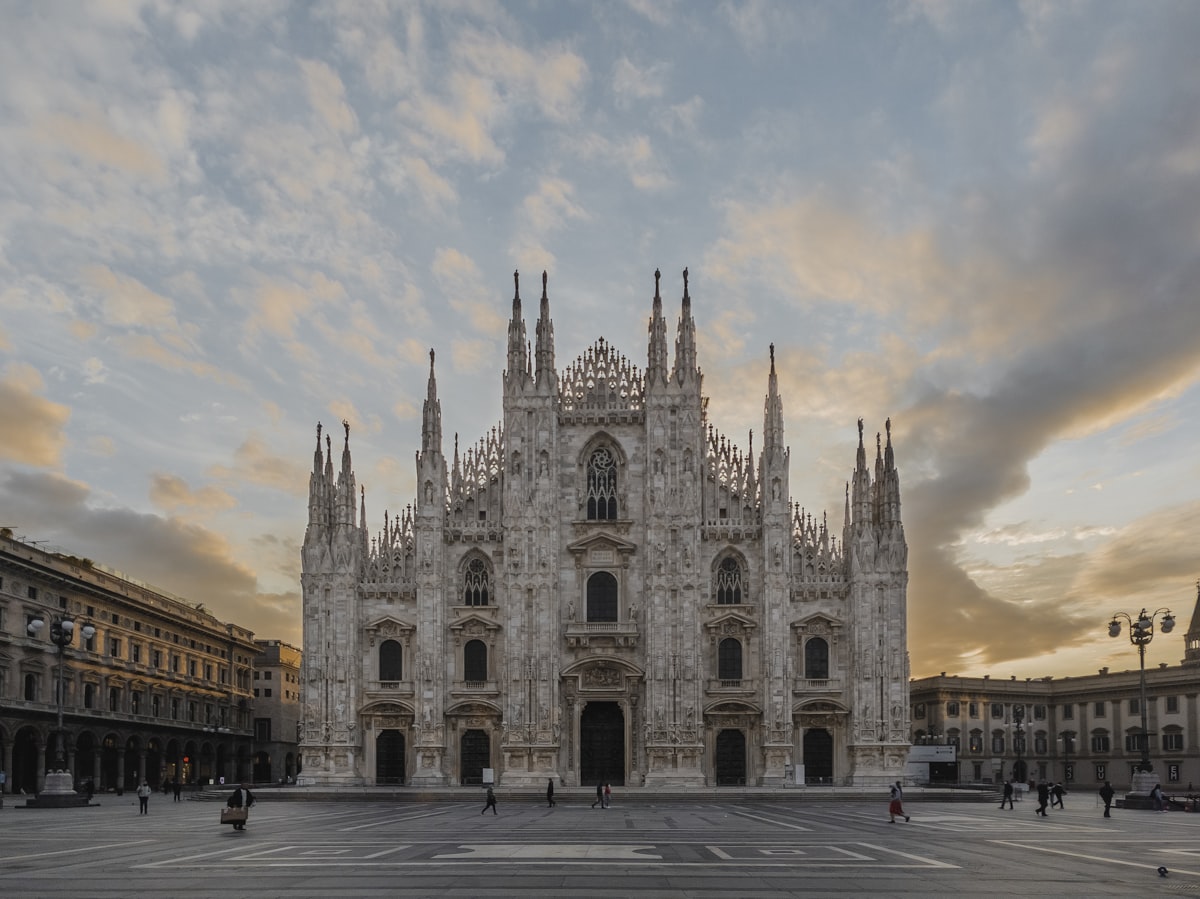
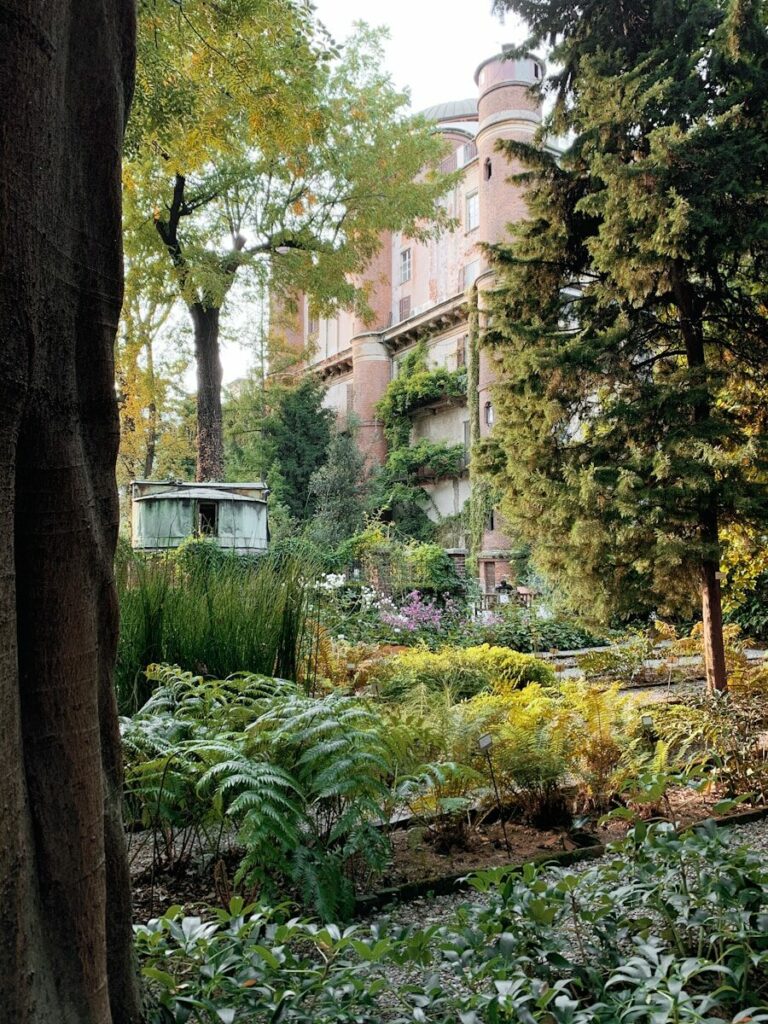
The Orto Botanico di Brera reopens on April 1, and admission is free — a detail that feels almost subversive in a city where luxury usually carries a price tag. Tucked behind the Pinacoteca, this small botanical garden is one of Milan’s most peaceful spaces. In spring, its famous wisteria cascades from iron pergolas in shades of pale violet, and the air fills with a sweetness that stops you mid-stride.
Steps away, the Pinacoteca di Brera offers its collection of Mantegna, Raphael, and Caravaggio in the kind of uncrowded calm that summer visitors never experience. While winter wraps Milan’s galleries in quiet contemplation, spring pulls the art outdoors — into the street murals of Via Fiori Chiari, the independent galleries along Via Madonnina, and the open studios that appear without announcement in the weeks before Design Week.
Brera in spring rewards those who walk slowly. Turn a corner and find a courtyard exhibition. Sit at a small bar on Via Solferino and watch the neighbourhood’s mix of painters, architects, and well-dressed locals settle into the long light of an April evening. This is the Milan that doesn’t appear on itineraries — and it is the one you will remember.
When the clocks shift forward and the evenings stretch past eight, Milan lifts its social life skyward. Rooftop season is not merely an aesthetic preference — it is a citywide ritual, and spring marks its annual reopening.
Ceresio 7, perched atop the former Enel headquarters from the 1930s, remains the benchmark. Its two rooftop pools, 360-degree skyline panorama, and American bar — ranked among the world’s top 100 — create the kind of setting where a sunset aperitivo becomes an event in itself. At Radio Rooftop at ME Milan Il Duca, the 10th-floor terrace offers uninterrupted views of the city’s roofscape, from the Duomo spires to the Porta Nuova towers. And Terrazza Aperol, directly overlooking Piazza Duomo, delivers the most iconic vantage point in the city — a vivid orange Spritz in hand, the cathedral close enough to count its statues.
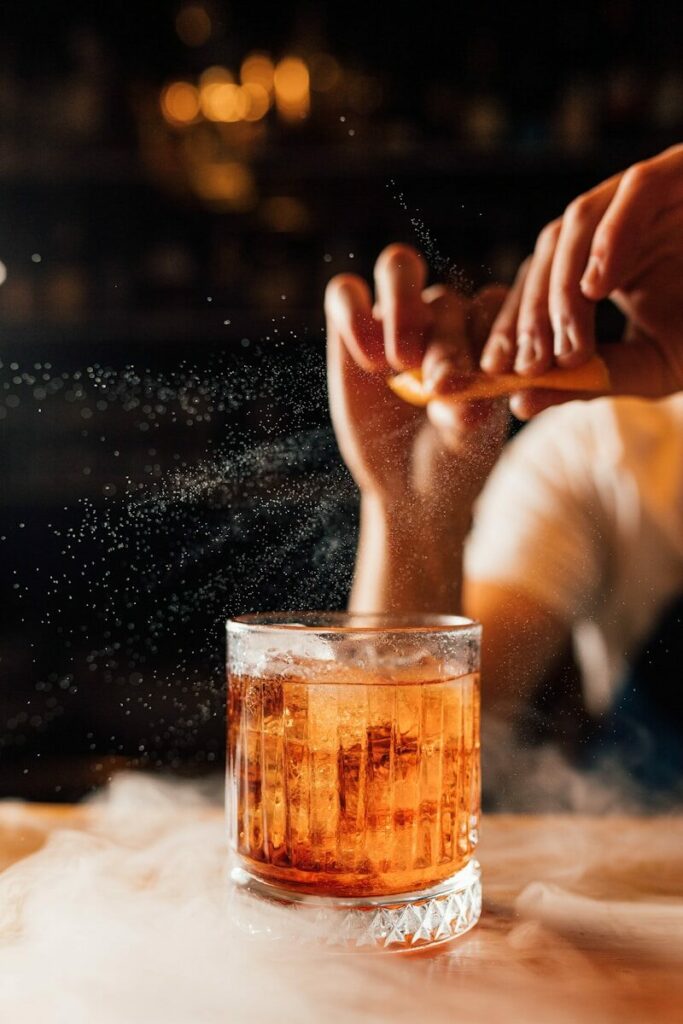
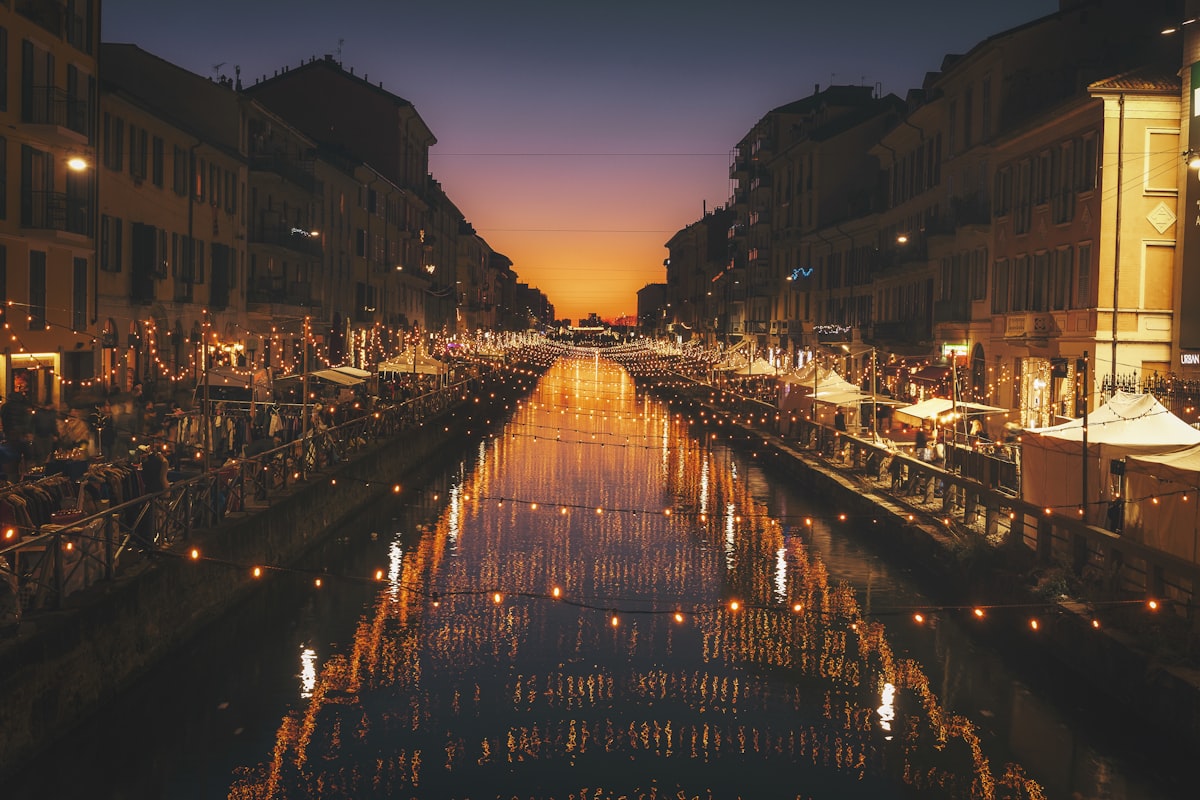
But the truest aperitivo in Milan is not found ten floors up. It is found along the Navigli canals at sunset, where the water turns gold and the tables spill onto the towpath, and the conversation blurs into the gentle noise of a city savouring the end of the day. And for those who know to ask, there is Bar Basso — the unassuming institution in Porta Venezia where the Negroni Sbagliato was born, served in oversize glasses that have not changed since the 1960s. This is not just drinking. It is the city’s oldest form of social architecture.
Parco Sempione, the great green lung behind Castello Sforzesco, awakens slowly in March — joggers first, then families, then the readers and the daydreamers who claim the benches beneath the plane trees. By April, the lawns are thick with wildflowers, and the Arco della Pace frames a sky that finally remembers what blue looks like.
But the most extraordinary spring spectacle in Milan belongs to the Collina dei Ciliegi in Bicocca — an artificial hill planted with nearly a thousand cherry trees that erupt into blossom between late March and mid-April. Built on the site of former Pirelli factories along Viale Sarca, this 30,000-square-metre park offers Milan’s answer to Japanese hanami, a fleeting explosion of pink and white that lasts barely two weeks and draws the entire neighbourhood outdoors.
The Giardini Pubblici Indro Montanelli, Milan’s oldest public garden, fills with magnolias and azaleas. The Bosco Verticale — Stefano Boeri’s landmark vertical forest — takes on an entirely new character when viewed from below in full spring foliage, its 800 trees and 15,000 plants creating a canopy that shifts with every passing cloud. And in late May, the annual Cortili Aperti initiative opens the doors of private Art Nouveau residences and Renaissance palazzi, revealing hidden courtyards, frescoed loggias, and gardens that most Milanese have never seen.
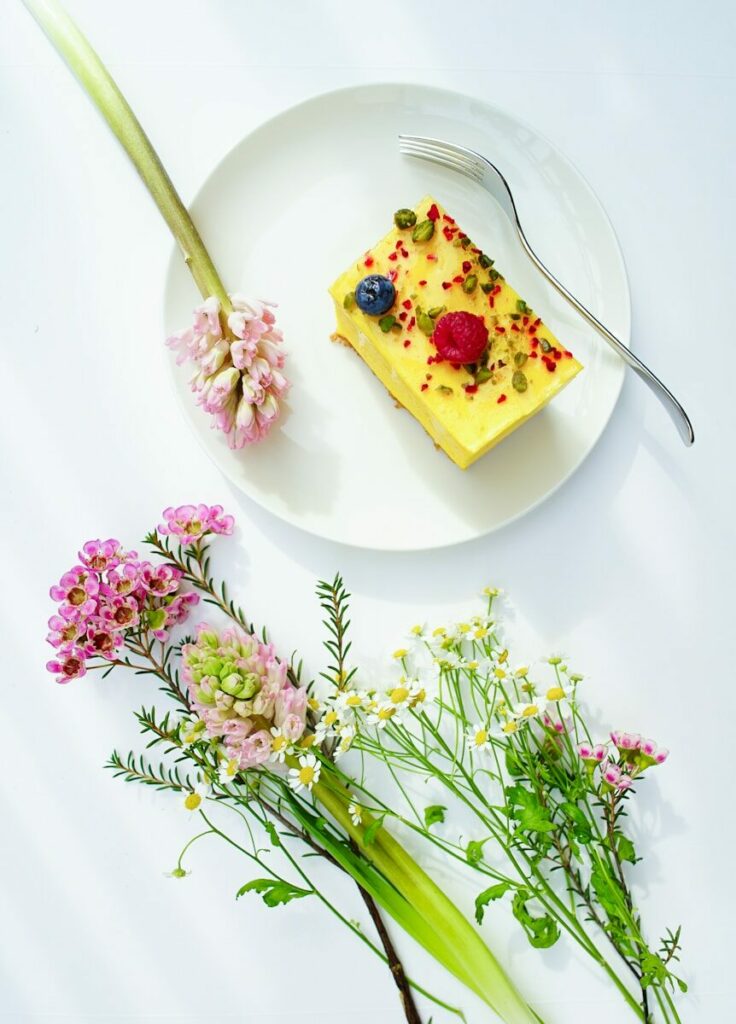
Milan’s kitchens change with the light. When the first asparagus arrives from the Veneto, when fresh peas appear at the market stalls, when strawberries from Basilicata begin to replace the last of the winter citrus — the entire city’s menu shifts. Risotto alla milanese gives way to risotto with asparagus tips and lemon zest. Ossobuco cedes the table to lighter preparations of veal with spring herbs. The food becomes the season.
Mercato Metropolitano, Milan’s vast sustainable food hall near Porta Genova, is the place to taste this transition — a curated market of small producers, organic vendors, and artisan kitchens that embodies the city’s evolving relationship with food. For a deeper exploration, our Milan Food Market & Aperitivo tour traces the city’s culinary identity through its most authentic neighbourhoods.
For the definitive spring table, there is Seta at Mandarin Oriental, where chef Antonio Guida holds two Michelin stars and composes seasonal tasting menus that treat each ingredient as a meditation. His spring menus draw on the first harvests of the Po Valley, and the result is cooking that is technically extraordinary and deeply, quietly Italian. Along the Navigli, restaurant terraces reopen one by one, and the simple pleasure of eating outdoors — a plate of burrata, a glass of Franciacorta, the canal light fading — becomes its own kind of luxury.
Spring is the season that rewards a slower, more intentional approach to Milan. The crowds of summer have not yet arrived. The cultural calendar is at its richest. The city is physically beautiful in a way that winter obscures and summer overwhelms. This is the ideal window for a private Milan experience — one built around your interests, your pace, and the insider access that transforms a visit into something personal.
Milan itself is changing. The infrastructure built for the Milano Cortina 2026 Winter Olympics has reshaped entire neighbourhoods, adding new public spaces, transport links, and cultural venues that make the city more navigable and more surprising than ever before. For those who catch the tail end of fashion season in early spring, the energy of Milano Fashion Week still lingers in the ateliers and showrooms of the Quadrilatero della Moda.
Whether you come for the design, the gardens, the rooftops, or simply the light, spring in Milan offers something that no other season can: a city fully awake, fully alive, and ready to be discovered on your terms.
Is spring a good time to visit Milan?
Spring is arguably the best time to visit Milan. The weather is mild — daytime temperatures typically range from 15 to 22 degrees Celsius — and the city’s cultural calendar peaks with Salone del Mobile, Fuorisalone, and Cortili Aperti. Hotel availability is better than during Fashion Week, and outdoor spaces from rooftop bars to botanical gardens are at their finest.
When is Salone del Mobile 2026?
The 64th edition of Salone del Mobile runs from April 21 to 26, 2026, at Fiera Milano Rho. Professional days run Tuesday through Thursday, with the fair opening to the general public from Friday to Sunday. Tickets for the general public start at approximately 38 euros.
What is Fuorisalone?
Fuorisalone is the unofficial, citywide programme of design events, exhibitions, and installations that takes place across Milan during Salone del Mobile week. Unlike the trade fair at Rho, most Fuorisalone events are free and open to the public, spread across districts including Brera, Tortona, Isola, and 5VIE. In 2026, the theme is “Essere Progetto” (Being a Project).
What should I wear in Milan in spring?
Milan is a fashion capital, and locals dress with considered elegance even on casual outings. For spring, expect variable weather — layering is essential. A tailored jacket or trench coat, comfortable walking shoes with clean lines, and a light scarf for cooler evenings will serve you well. During Design Week, the aesthetic leans creative and architectural; during normal spring days, smart-casual is the standard.
What are the best rooftop bars in Milan?
Ceresio 7 offers the most complete rooftop experience with pools and panoramic views. Radio Rooftop at ME Milan Il Duca provides a refined 10th-floor terrace. Terrazza Aperol overlooks Piazza Duomo and is ideal for a classic Spritz with a view. For a more intimate experience, Bar Basso offers the legendary Negroni Sbagliato at street level — where aperitivo tradition began.
When do Milan’s parks and gardens reopen in spring?
The Orto Botanico di Brera typically reopens on April 1 with free admission. Cherry blossoms at the Collina dei Ciliegi in Bicocca peak between late March and mid-April. Parco Sempione and Giardini Indro Montanelli are open year-round but come alive with spring blooms from mid-March onward. Cortili Aperti, the annual open-courtyards event, usually takes place on a Sunday in late May.
Milan food market tour with Italian breakfast, espresso tasting & traditional aperitivo. Experience authentic Milanese…
Discover More →
Family-friendly Milan walking tour from La Scala to Sforza Castle. Discover landmarks, stories & secrets…
Discover More →
VIP Milan shopping experience with personal stylist. Explore luxury boutiques, hidden ateliers & fashion district…
Discover More →
Skip-the-line Milan Duomo tour with rooftop terrace access. Explore Gothic architecture & enjoy panoramic city…
Discover More →