
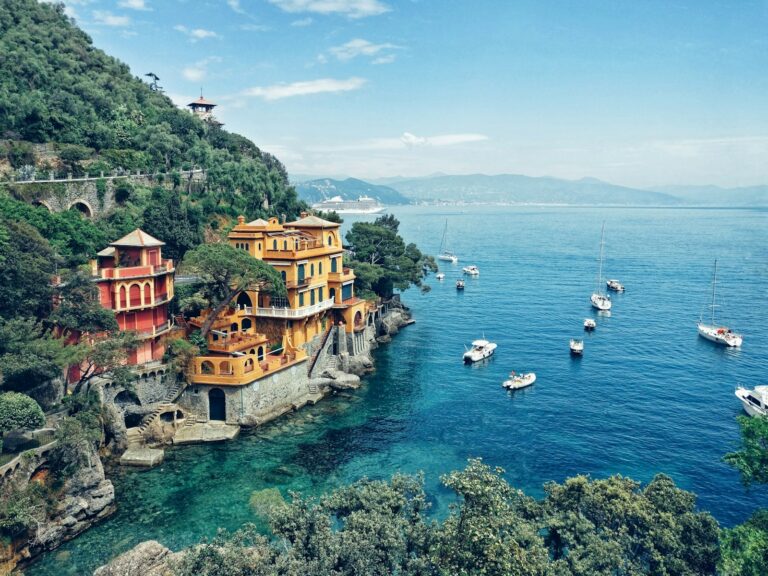
Portofino & Rapallo – Artisan Shops & Flavors of Liguria
A day filled with flavors, traditions, and the timeless charm of the Ligurian coast.
Discover More →
Discover why spring is the best time for Cinque Terre: hike Sentiero Azzurro, explore the reopened Via dell'Amore, avoid crowds & indulge in Ligurian luxury....
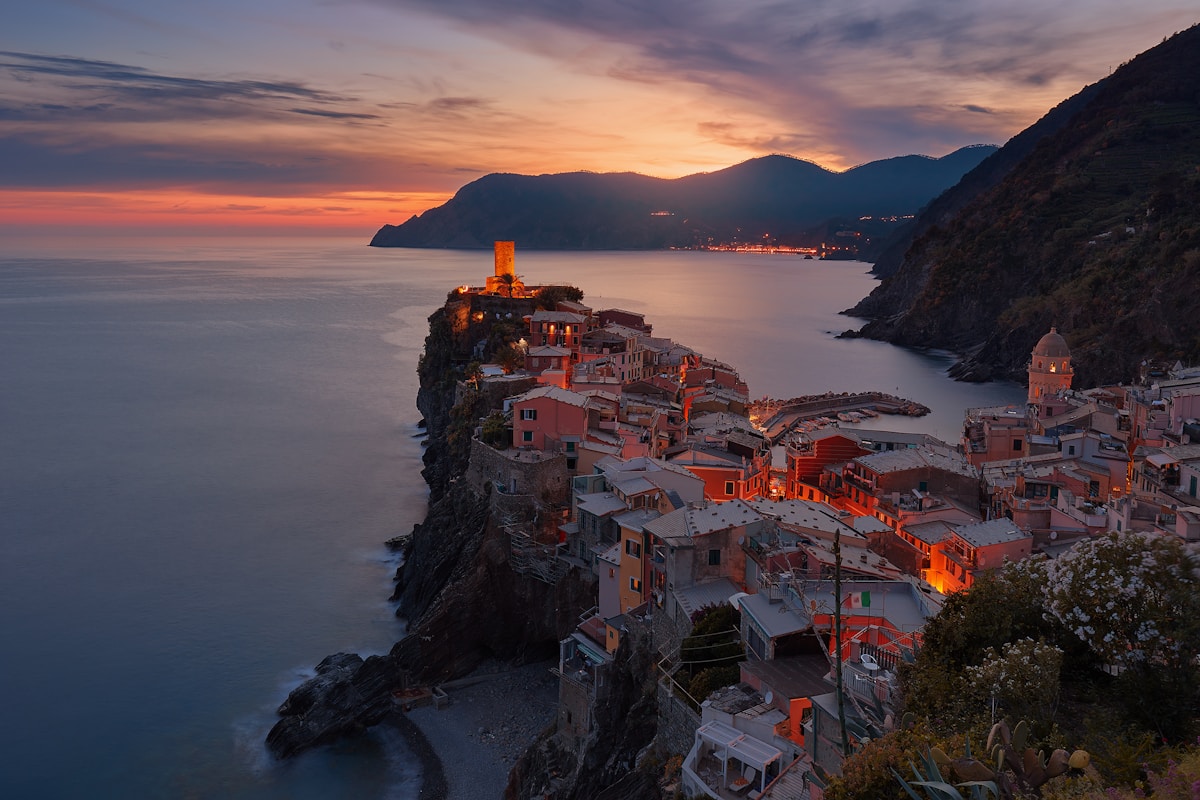
There is a moment each spring when the Ligurian coast shrugs off winter’s grey cloak and reveals something almost impossibly beautiful. The air turns soft with the scent of wild rosemary and lemon blossom, the Mediterranean shifts from steel to sapphire, and the five ancient villages of Cinque Terre come alive with a warmth that has nothing to do with the thermometer. This is the season the locals keep for themselves — and for those who know when to arrive.
Between late March and mid-June, Cinque Terre transforms into something the summer crowds never witness. Wildflowers blanket the terraced hillsides in violet and gold. Fishermen mend their nets in harbors still blissfully uncrowded. The coastal trails, carved into cliffs hundreds of meters above the sea, belong to early-morning hikers and the occasional mountain goat. It is Italy at its most elemental — stone, sea, vine, and sky — without the queues, the cruise-ship invasions, or the €18 Aperol Spritz.
What makes spring 2026 particularly extraordinary is the fully reopened Via dell’Amore, the legendary Path of Love that spent twelve years under restoration after devastating landslides. Combined with world-class hiking, hands-on pesto workshops, and a handful of genuinely luxurious places to lay your head, Cinque Terre in spring is not just a trip — it is a love letter written in basil, limestone, and light.
Summer in Cinque Terre has become a cautionary tale of overtourism — train platforms so packed that visitors are turned away, narrow alleyways where movement stalls entirely, and a general sense that the magic has been drowned in selfie sticks. Spring sidesteps all of this with elegant ease.
From April through early June, temperatures hover between a comfortable 15°C and 25°C — ideal for hiking without the punishing July heat that turns the exposed cliff trails into endurance tests. The light is extraordinary: low-angled and golden, painting the pastel-colored houses of each village in tones that make photographers weep with joy. Wisteria drapes over stone archways in Vernazza, bougainvillea erupts across Manarola’s facades, and the terraced vineyards glow with fresh green growth.
There are practical advantages too. Accommodation prices in April and May run 30-40% below peak-season rates. The Cinque Terre National Park trails are open and well-maintained without the summer restrictions that sometimes close sections due to overcrowding. Restaurant tables materialize without reservations. And the train that connects all five villages — still the most efficient way to hop between them — runs with breathing room rather than sardine-tin compression.
Perhaps most importantly, spring lets you experience Cinque Terre as a UNESCO World Heritage Site rather than a theme park. You can hear the waves. You can smell the focaccia. You can actually stop on the trail, sit on a sun-warmed rock, and absorb the view without someone elbowing past you for their Instagram moment.
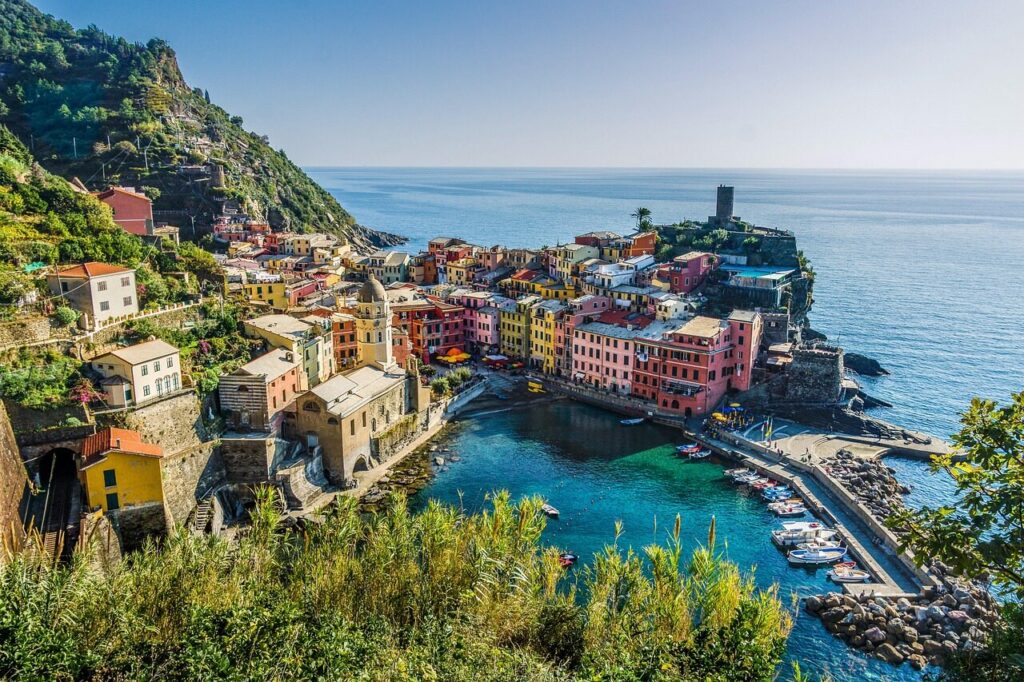
The Sentiero Azzurro — the Blue Trail — is the thread that stitches all five villages together, tracing roughly 12 kilometers of the most dramatic coastline in the Mediterranean. It is not a wilderness hike; it is a curated encounter with terraced agriculture, centuries-old dry-stone walls, and views that stop you mid-stride. In spring, it is nothing short of spectacular.
The trail divides into four sections, each with its own character. The stretch from Monterosso to Vernazza (approximately 3.5 km, 90 minutes) is widely considered the finest — a moderately challenging path that climbs through olive groves and descends past tiny vineyard plots before revealing Vernazza’s harbor in a scene so perfectly composed it seems staged. The Vernazza to Corniglia section is the most demanding, with steep switchbacks and exposed ridgeline walking, but the reward is solitude and uninterrupted panoramas. Corniglia to Manarola offers gentler terrain through vineyards that produce the region’s prized Sciacchetrà dessert wine. And Manarola to Riomaggiore now includes the legendary Via dell’Amore.
Access requires a Cinque Terre Card, available as a hiking-only pass (€7.50/day) or a combined hiking-and-train pass (€16/day for adults, €13 on weekdays in spring) from the national park offices at each village station. The card funds trail maintenance, which is no small matter — these paths are carved into notoriously unstable terrain and require constant attention.
Spring hiking conditions are superb. The trails are dry but not dusty, the temperatures forgiving, and the Mediterranean light renders every photograph in tones of deep blue and warm gold. Start early — ideally by 7:00 a.m. — and you will have the best sections nearly to yourself. Wear proper hiking shoes (the stones are uneven and can be slippery after overnight dew), carry water, and resist the temptation to rush. This is a trail for savoring.
For twelve years, the Via dell’Amore existed only in memory and old postcards — a kilometer-long cliffside promenade between Riomaggiore and Manarola that was sealed shut in 2012 after devastating rockslides. Its reopening in February 2025, following a €23 million restoration involving steel-mesh rockfall barriers and reinforced retaining walls, was one of the most celebrated moments in Italian tourism.
The path itself is almost absurdly romantic. Hewn from solid rock in the 1920s during the construction of the railway tunnel below, it hugs the cliff face about 100 meters above the waves, offering unobstructed views of the coast stretching south toward the Gulf of Poets. Lovers have carved their names into the tunnel walls for generations; padlocks cluster on the railings like metallic barnacles. The path is flat and fully accessible — a striking contrast to the demanding trails elsewhere in the park.
Access is carefully managed: visitors must book timed-entry tickets at viadellamore.info, with a maximum of 200 people admitted per 30-minute slot. Tickets cost €10 per person in addition to the standard Cinque Terre Card. This controlled approach preserves the experience beautifully — you can walk the path without feeling herded, pause at the viewpoints, and let the setting work its particular magic. In spring, with the sea shimmering below and wild capers sprouting from the cliff face, the Via dell’Amore earns its name completely.
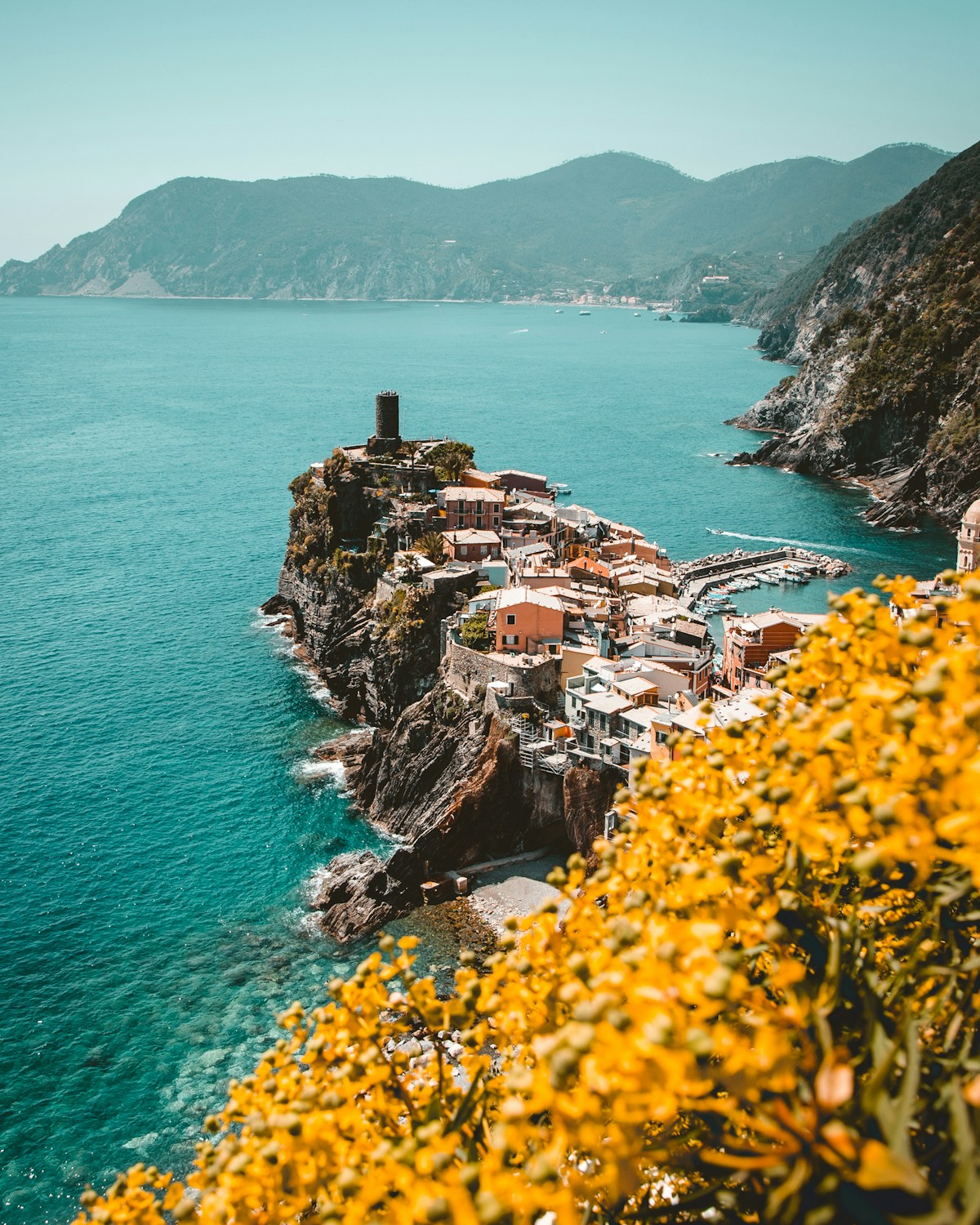
Each of the five villages possesses a distinct personality, and spring amplifies their individual charms in ways that summer’s homogenizing crowds tend to flatten.
Vernazza is the jewel, and everyone knows it. Its natural harbor — the only one in Cinque Terre — is framed by a medieval watchtower and an amphitheater of terracotta-roofed houses stacked improbably up the hillside. In spring, the piazza by the water is still a place where old men play cards and children chase pigeons rather than a staging ground for tour groups. Walk up to the Castello Doria (not to be confused with the one in Portovenere) for sunset views that justify every superlative ever written about this coast.
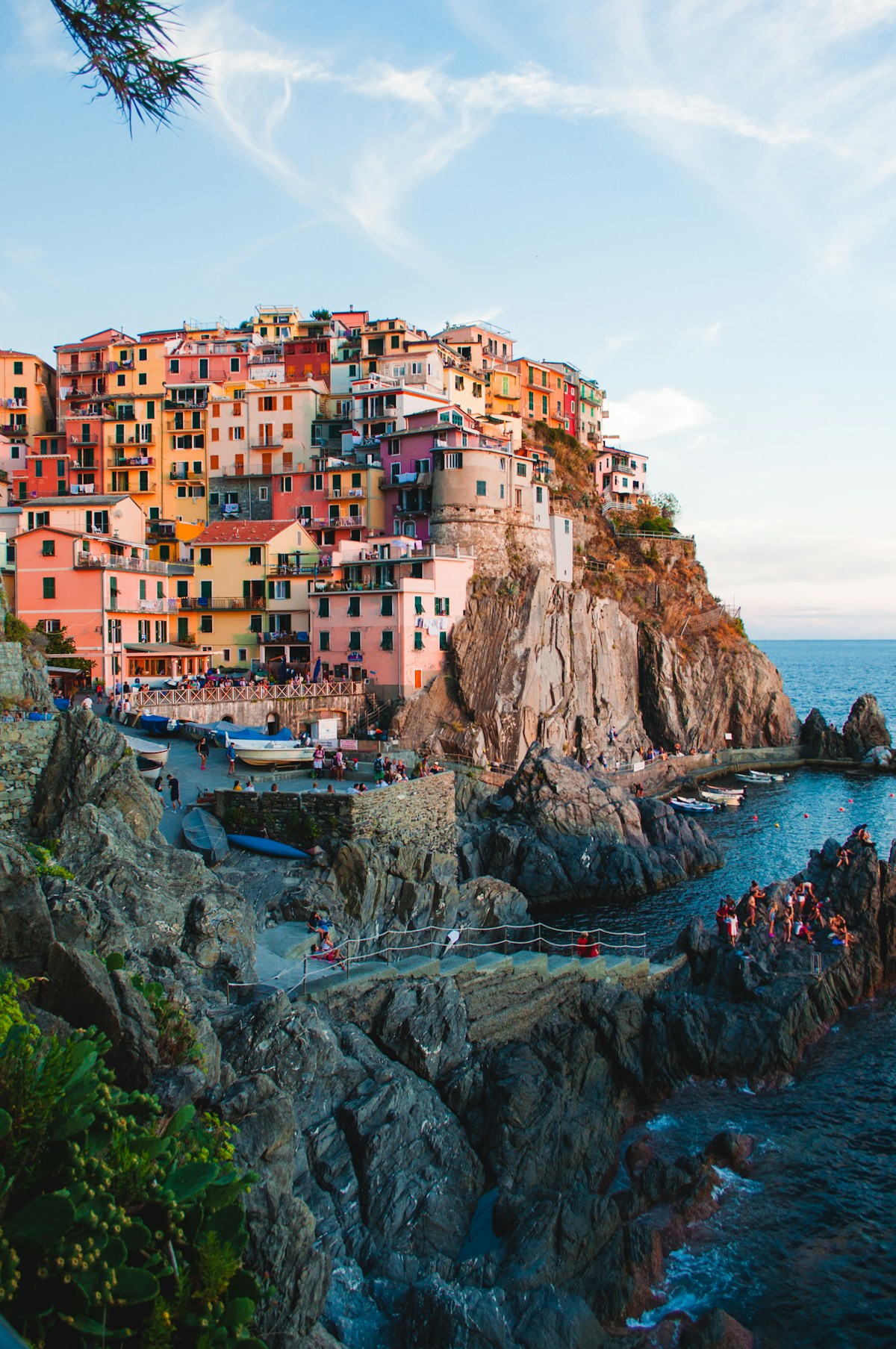
Manarola delivers Cinque Terre’s most iconic image: the cluster of candy-colored houses tumbling toward a rocky inlet, best photographed from the cemetery path above the village. At dusk, when the buildings glow amber and pink against the darkening sea, it is the kind of scene that makes you understand why painters have been coming here for centuries. The surrounding vineyards, among the steepest in Europe, are vibrant green in spring and crisscrossed with ancient stone paths perfect for aimless wandering.
Monterosso al Mare, the largest and most traditionally resort-like village, has the only real sandy beach in Cinque Terre. In spring, before the umbrellas claim every square meter, the beach is a glorious place for a morning walk. The old town, separated from the newer Fegina district by a short tunnel, hides excellent restaurants and the striking Church of San Giovanni Battista with its distinctive Ligurian Gothic facade.
Corniglia sits alone on its hilltop, the only village without direct sea access, connected to the station by the famous Lardarina staircase — 382 steps that serve as a daily fitness test for visitors. The reward is the most authentic atmosphere of any village, with genuine wine bars, a tiny main street that dead-ends at a panoramic terrace, and vineyards that produce exceptional Vermentino white wine. Spring is when the terraces blaze with wildflowers and the views from the belvedere stretch endlessly in both directions.
Riomaggiore, the southernmost village and gateway to the Via dell’Amore, is a vertical tumble of pink, yellow, and ochre houses cascading down a narrow ravine to a miniature harbor. Its main street follows the course of a buried stream, and the lanes that branch off it climb steeply to hidden gardens fragrant with lemon trees in full spring bloom. The view from the castle ruins at the top of the village, looking north along the entire Cinque Terre coast, is one of the great rewards for those willing to climb.

Liguria’s claim to pesto Genovese is non-negotiable, and Cinque Terre takes the craft seriously. The basil here grows small-leafed and intensely aromatic, nourished by salt air and the same sun that ripens the olive oil. True pesto — the kind made in a Carrara marble mortar with an olive wood pestle, using pine nuts from the local maritime pines, Parmigiano-Reggiano, Pecorino Fiore Sardo, Ligurian extra virgin olive oil, garlic from Vessalico, and coarse sea salt — bears almost no resemblance to the jarred supermarket versions the rest of the world knows.
Two experiences stand out for learning the craft. Nessun Dorma in Manarola, beloved for its cliffside aperitivo terrace with arguably the best view in all of Cinque Terre, runs intimate pesto-making workshops (€85 per person) where you grind your own batch in a traditional mortar, learn the precise technique of circular crushing rather than grinding, and eat the results with fresh trofie pasta while staring out at the Ligurian Sea. It is one of those experiences that imprints itself permanently on your memory.
In Monterosso, the Cinque Terre Cooking School offers a more comprehensive immersion (€100 per person) that extends beyond pesto to include focaccia di Recco, stuffed anchovies, and other Ligurian staples, all prepared in a kitchen overlooking the sea. Spring classes have the advantage of using basil at its most tender and fragrant, before the summer heat toughens the leaves and intensifies the flavor toward bitterness. Book either experience well in advance — they fill quickly even in the quieter months.
Just beyond the Cinque Terre National Park boundary, a 30-minute ferry ride south from Riomaggiore, sits Portovenere — often called the sixth village, though in truth it is something quite different. Where the Cinque Terre villages are rough-hewn fishing hamlets elevated to postcard fame, Portovenere is polished, aristocratic, and quietly grand. It shares the same UNESCO designation and the same heart-stopping coastal setting, but wraps them in a more refined package.
The village is dominated by the Castle Doria, a massive Genoese fortification from the 12th century that crowns the promontory and offers views across the Gulf of Poets — so named because Lord Byron, Percy Bysshe Shelley, and their circle of Romantic poets frequented these shores in the early 19th century. Below the castle, Byron’s Grotto marks the spot from which the poet reportedly swam across the gulf to visit Shelley in San Terenzo — a feat of approximately five kilometers that speaks either to his athletic prowess or his recklessness, depending on your interpretation.
The Church of San Pietro, perched on the very tip of the promontory, is a masterpiece of Ligurian Gothic architecture, its black-and-white striped marble facade rising directly from the rocks above the churning sea. It was built in 1277 on the ruins of a 6th-century temple to Venus — Portovenere literally means “Port of Venus” — and remains one of the most dramatically situated churches in Italy.
From Portovenere, small boats run to Palmaria Island, the largest island in the Ligurian archipelago and a nature reserve with walking trails, hidden swimming coves, and a blissful absence of cars and crowds. In spring, the island’s Mediterranean scrub bursts with rosemary, thyme, and wild orchids.
Accommodation in Cinque Terre proper skews toward small guesthouses and vacation rentals — there are no large luxury resorts within the villages themselves, which is part of their charm. But several properties deliver genuine quality.
Hotel Porto Roca in Monterosso occupies a clifftop position just above the village, with a terrace restaurant and infinity-edged views that make breakfast an almost spiritual experience. Rooms are refined without being ostentatious, and the location — steps from the old town yet removed from its narrow-lane bustle — strikes a perfect balance. Spring rates are significantly more accessible than in high summer, making this the moment to book a sea-view suite.
La Torretta in Manarola is a boutique gem tucked into a converted medieval watchtower at the top of the village. With just a handful of individually designed rooms, it offers an intimacy that larger properties cannot match. The rooftop terrace, where breakfast is served in warm weather, looks directly across the village rooftops to the open sea — a panorama so striking that guests routinely arrive late to their hiking plans because leaving the breakfast table feels like an act of violence.
For those willing to base themselves just outside the five villages, Grand Hotel Portovenere is the area’s most classically luxurious option. Housed in a converted 17th-century Franciscan monastery, it combines historic architecture with contemporary comfort, a full-service spa, and a position directly on the waterfront that makes the daily ferry to the Cinque Terre villages feel like a pleasure cruise rather than a commute.
For dining, Nessun Dorma in Manarola is essential — not merely for the view (though it is sensational) but for the quality of the tagliere boards, local wines, and pesto bruschetta. In Vernazza, seek out the Gambero Rosso-recommended restaurants along the harbor: the freshly caught anchovies, prepared in the Monterossina style (salt-cured and served with lemon and olive oil), are a regional delicacy that tastes entirely different here than anywhere else. Pair them with a crisp local Vermentino, and you will understand why Ligurian cuisine, despite its simplicity, commands such devotion.
The single best piece of advice for Cinque Terre in spring: stay overnight. Day-trippers, even in the quieter months, tend to arrive between 10:00 a.m. and 4:00 p.m. by train from Florence, Milan, or the cruise port in La Spezia. The golden hours — early morning and evening — belong to those who sleep in the villages. Watching Vernazza’s harbor at dawn, or Manarola’s houses catch the last light while the day-trippers have departed, transforms Cinque Terre from a spectacular attraction into something genuinely intimate.
Start hiking early. Setting out on the Sentiero Azzurro by 7:00 a.m. gives you the trails in near-solitude and the best photographic light. By mid-morning, the path between Monterosso and Vernazza can feel busy even in May. The early bird here does not merely catch the worm — it catches the entire performance.
Getting there is straightforward. La Spezia is the gateway city, reachable by direct train from Florence (2.5 hours), Milan (3 hours via high-speed rail to La Spezia Centrale), and Pisa (1 hour). From La Spezia, the regional train to Riomaggiore takes just eight minutes. Pisa’s Galileo Galilei Airport is the nearest international airport, with excellent rail connections. Some travelers prefer to fly into Genoa’s Cristoforo Colombo Airport, which offers a scenic coastal train ride to the Cinque Terre via Levanto.
Book the Via dell’Amore tickets early — spring weekends sell out weeks in advance. Purchase your Cinque Terre Card online before arriving to avoid queues at the station kiosks. And bring layers: spring mornings can be cool on the exposed trails, even when the afternoon sun is warm enough for a gelato break on the Monterosso beach.
Above all, resist the temptation to see everything in a single day. Cinque Terre in spring rewards lingering — a second espresso on a quiet piazza, an unplanned detour up a vineyard path, an hour spent watching fishing boats bob in a harbor that has looked essentially the same for five hundred years. This is not a destination to be conquered. It is one to be absorbed, slowly, like the warmth of the Ligurian sun on ancient stone.
When is the best time to visit Cinque Terre in spring?
Mid-April through late May offers the ideal combination of warm weather (18-24°C), blooming wildflowers, manageable crowds, and fully open hiking trails. Early April can still see occasional rain, while June begins the transition to summer prices and visitor numbers. For the absolute sweet spot, aim for the first two weeks of May.
Is the Via dell’Amore open in 2026?
Yes. The Via dell’Amore reopened in February 2025 after a 12-year closure and extensive restoration. Access requires a timed-entry ticket (€10 per person) in addition to the Cinque Terre Card. Slots are limited to 200 people per 30-minute window, so advance booking at viadellamore.info is strongly recommended, especially for spring weekends.
How can I avoid crowds in Cinque Terre during spring?
Stay overnight in one of the villages to enjoy the golden hours before 9:00 a.m. and after 5:00 p.m. Start hikes at 7:00 a.m. Visit Corniglia and Riomaggiore before the more famous Vernazza and Manarola. Avoid weekends if possible — midweek visits are noticeably quieter. Use the ferry between villages for a different perspective and fewer fellow passengers than the train.
What are the best hiking trails in Cinque Terre for spring?
The Sentiero Azzurro (Blue Trail) connecting all five villages is the essential hike, with the Monterosso-to-Vernazza section being the most scenic. For more challenging terrain, the high-altitude Sentiero Rosso (Red Trail, SVA/Trail 1) runs along the ridgeline above the coast and sees far fewer hikers. The Via dell’Amore between Manarola and Riomaggiore is a flat, accessible walk with extraordinary views.
Where should I take a pesto-making class in Cinque Terre?
Nessun Dorma in Manarola offers intimate workshops (€85) with stunning views and a traditional mortar-and-pestle method. The Cinque Terre Cooking School in Monterosso provides a broader Ligurian cooking experience (€100) covering pesto, focaccia, and local seafood dishes. Both require advance booking, particularly in spring when class sizes are small.
What luxury hotels are near Cinque Terre?
Hotel Porto Roca in Monterosso is the top choice within the five villages, with clifftop positioning and sea-view suites. La Torretta in Manarola offers boutique intimacy in a converted medieval tower. For full-service luxury, Grand Hotel Portovenere, housed in a 17th-century monastery, is a 30-minute ferry ride from Riomaggiore and the area’s most refined property.
Is Portovenere worth visiting from Cinque Terre?
Absolutely. Portovenere offers a more polished, elegant atmosphere than the five villages, with the dramatic Church of San Pietro, the imposing Castle Doria, Byron’s Grotto, and boat trips to the unspoiled Palmaria Island. The 30-minute ferry from Riomaggiore is itself a scenic highlight. Allocate at least half a day — ideally a full day to include Palmaria — and consider basing yourself at the Grand Hotel Portovenere for part of your stay.
A day filled with flavors, traditions, and the timeless charm of the Ligurian coast.
Discover More →
Board an elegant Venetian taxi for a romantic and unforgettable experience. Sail towards Villa Balbianello…
Discover More →
Welcome to Bologna, the vibrant heart of Emilia-Romagna and Italy's food capital. Known as 'La…
Discover More →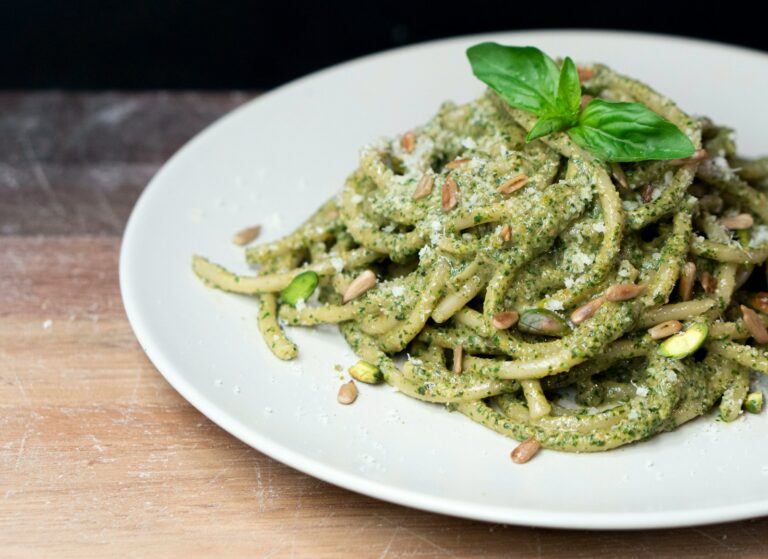
A sensory journey through the true heart of Liguria—simple, authentic, and unforgettable.
Discover More →