Milan VIP Shopping & Fashion Tour
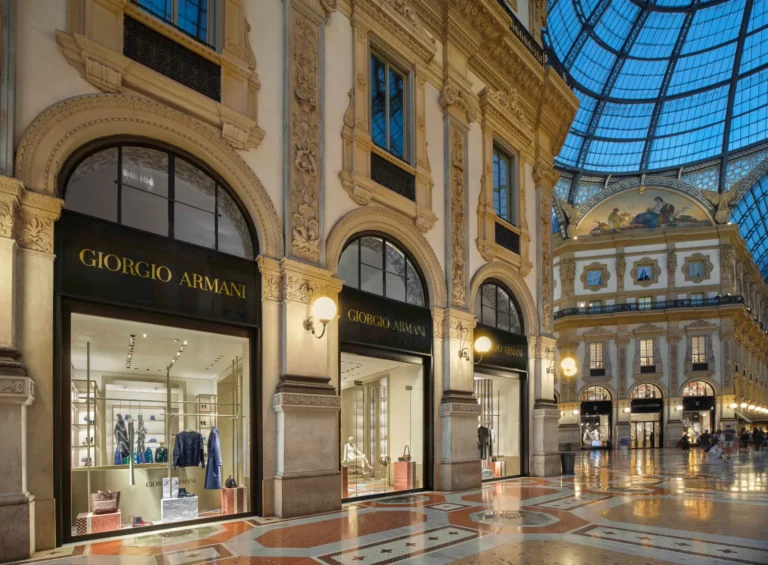
VIP Milan shopping experience with personal stylist. Explore luxury boutiques, hidden ateliers & fashion district…
Discover More →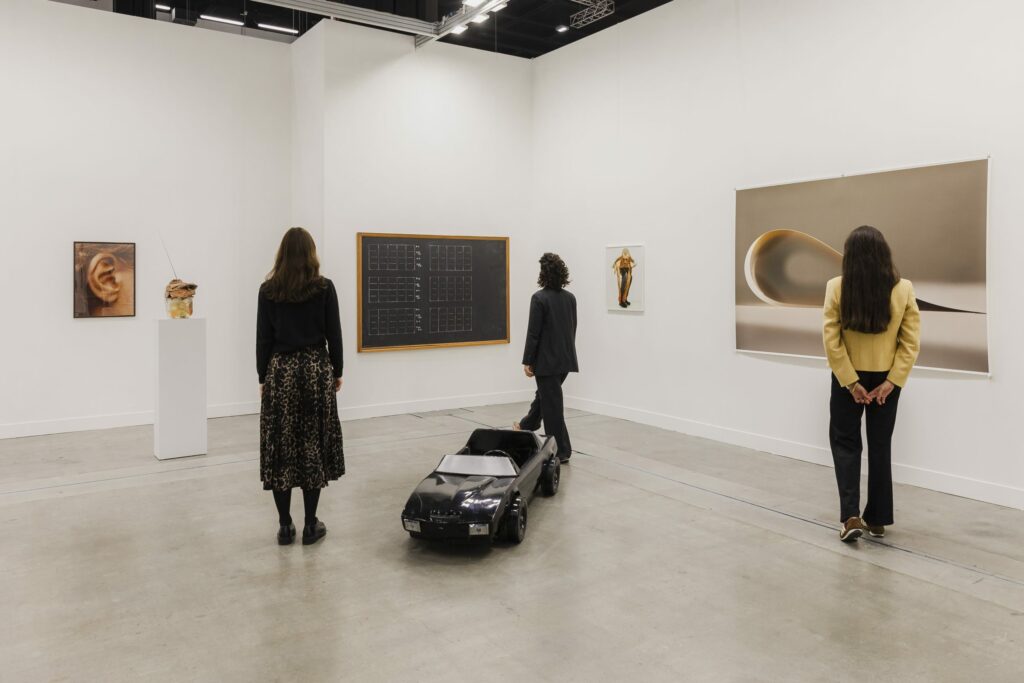
miArt 2026 celebrates 30 years at CityLife's Allianz MiCo with 160 galleries from 24 countries. Your insider guide to the fair, Milano Art Week, and the best of Milan's contemporary art scene....
There is a week each April when Milan sheds its workaday rhythm and surrenders to art. The galleries of Brera stay open past midnight. Collectors murmur over espresso in hidden courtyards. Taxi drivers learn to pronounce the names of obscure video artists. In 2026, that week arrives with an anniversary: miArt, the city’s international modern and contemporary art fair, turns thirty — and it has never looked quite like this before.
The milestone edition, running April 17–19, 2026 (with a VIP preview on April 16), carries the title New Directions — a tribute to John Coltrane‘s 1963 album, released the year the saxophonist pushed jazz beyond its known borders. It is also the centenary of Coltrane’s birth. For miArt 2026, the reference is not decorative. It is a declaration: this is a fair that intends to improvise, to listen, to transform.
With 160 galleries from 24 countries, a dramatic new venue overlooking Milan’s most futuristic skyline, and a curatorial architecture that treats the fair itself as a kind of composition, New Directions marks the most ambitious reinvention in miArt’s three-decade history. For art lovers, collectors, and those who simply believe that a city reveals its truest self through the art it chooses to show, this is the week to be in Milan.
Behind every great fair is a vision, and at miArt the vision belongs to Nicola Ricciardi. Milan-born, a graduate of Bard College’s curatorial program in New York, and previously the artistic director of OGR Torino — where he staged solo exhibitions by Tino Sehgal, Monica Bonvicini, and Trevor Paglen — Ricciardi has spent five years reshaping miArt from a commercial marketplace into something closer to a living cultural organism.
With New Directions, that transformation enters a new key. The Coltrane tribute is more than thematic branding. Jazz, Ricciardi has argued, operates through structured improvisation — musicians who know the rules well enough to break them, who listen as intently as they play. The 2026 edition applies that logic across every layer of the fair, from the way galleries are grouped to the introduction of two entirely new sections. The result is a Milan art fair that feels less like a grid of booths and more like a conversation unfolding in real time.
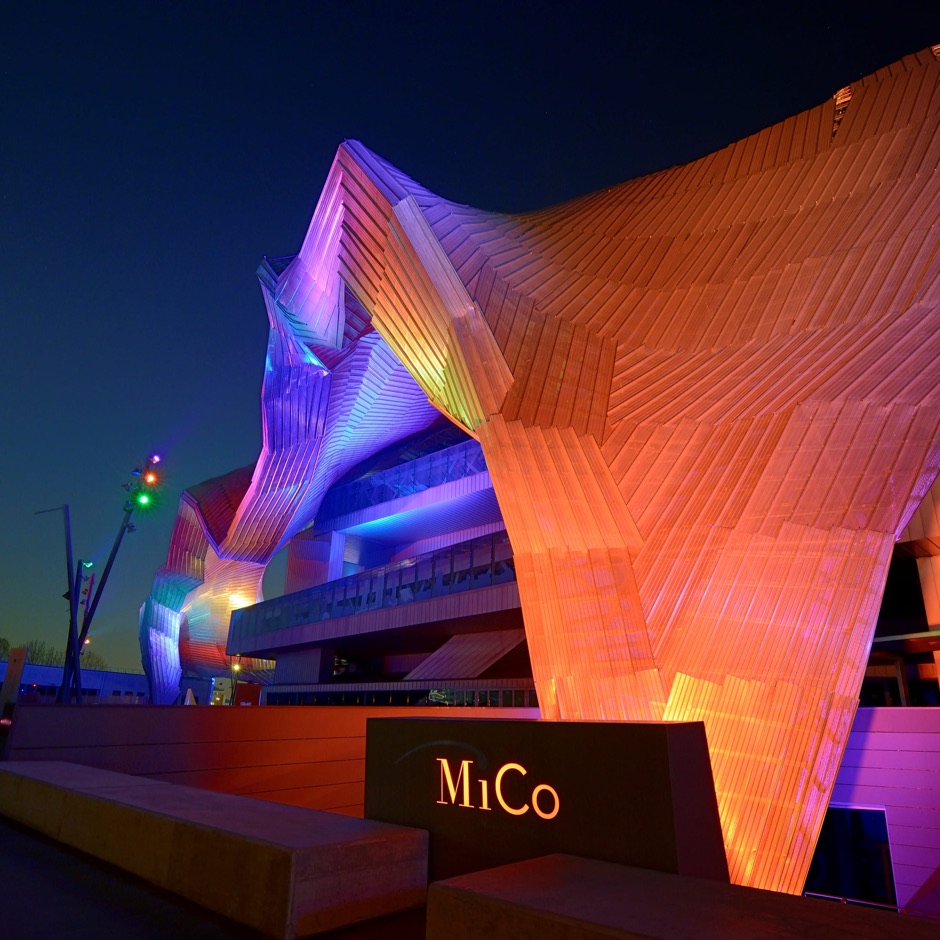
The move to a new venue amplifies the ambition. For the first time, miArt occupies the South Wing of Allianz MiCo, Europe’s largest convention centre, designed by Mario Bellini Architects. Three tapered glass foyers offer 180-degree views over the CityLife district — a panorama of Zaha Hadid’s spiraling tower, Arata Isozaki’s slender column, and Daniel Libeskind’s crystalline prism. It is, quite literally, a fair with new directions in every window.
The journey through miArt 2026 is designed as a progressive, rhythmic experience across three levels — a deliberate echo of the jazz metaphor that underpins the entire edition.
Emergent, curated by Vienna-based curator Attilia Fattori Franchini, occupies the entrance level. Twenty-nine younger galleries, many participating for the first time, present experimental work by artists who are redefining contemporary art in Milan and beyond. This is where the energy hits first — raw, urgent, unfiltered. Fattori Franchini, whose practice spans technology, post-capitalism, and moving image, has assembled a section that feels like a manifesto for the next generation.
Descend to the lower floor and the tempo shifts. Established, the fair’s central section, gathers 111 galleries spanning more than a century of art history — from modern masters to the most recent contemporary research. The roster reads like an atlas of the international art world: Ben Brown Fine Arts and Sadie Coles HQ from London, Galerie Buchholz from Cologne and Berlin, Galerie Peter Kilchmann from Zurich, Galerie Lelong from Paris and New York, and Galerie Hubert Winter from Vienna, among many others. Collectors will find everything from postwar abstraction to the freshest paint still drying on canvas.
Sharing the lower floor is Interplay, one of two brand-new sections. The name comes from jazz terminology — the close listening and instant response between musicians in ensemble performance. At miArt, Interplay translates this into shared booth spaces where two galleries collaborate to build common narratives. It is an experiment in dialogue rather than monologue, and one of the most genuinely original structural ideas any art fair has introduced in recent years.
The upper floor is reserved for contemplation and connoisseurship. Established Anthology presents twenty curated projects that explore “time, memory, cyclical histories and imagined futures” — a meta-section that invites galleries to think beyond the commercial imperative and construct museum-quality presentations. Nearby, the new Movements section — developed in partnership with the St. Moritz Art Film Festival (SMAFF) and curated by Stefano Rabolli Pansera — dedicates a purpose-built space to artist film and moving-image works. In a fair world often dominated by objects on walls, Movements is a welcome assertion that art can also flicker, loop, and unfold in time.
And then there is the Ruinart Champagne Lounge on the lower floor — because even the most serious art conversation benefits from a glass of blanc de blancs.
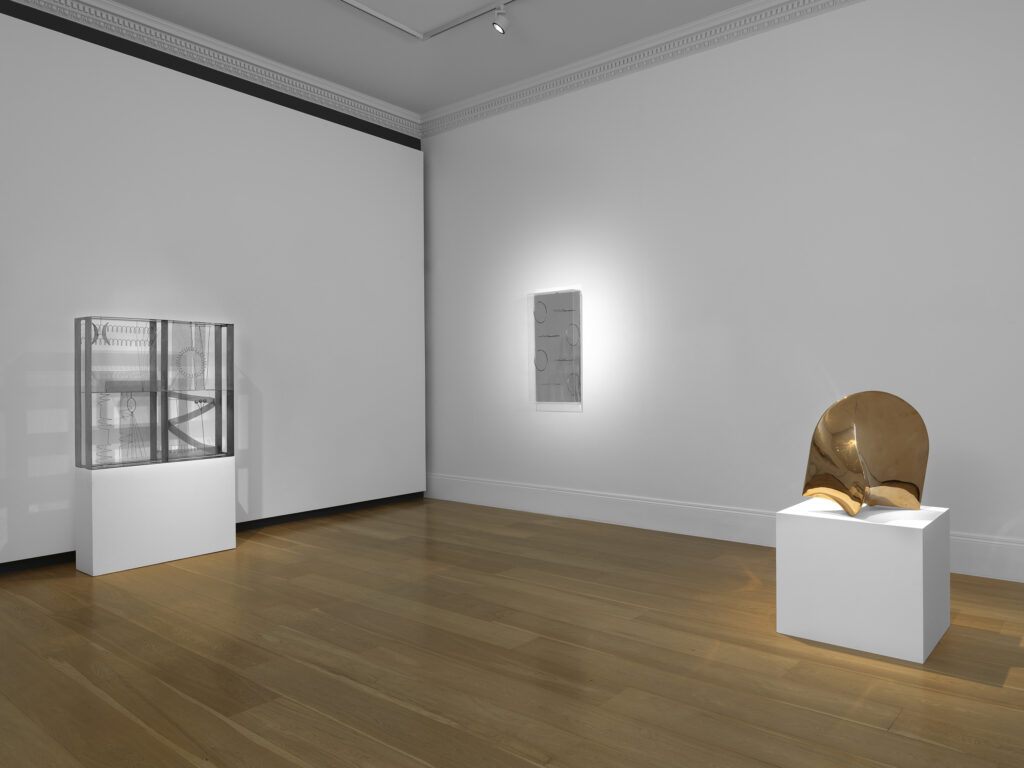
What separates a great art fair from a good one is what happens after the sales. At miArt, a constellation of prizes ensures that the best work shown does not simply disappear into private collections but enters the permanent cultural fabric of the city.
The most significant is the Fondazione Fiera Milano Acquisition Fund, which dedicates €100,000 annually to purchasing works exhibited at the fair. Over the years, the fund has assembled a collection of more than 120 pieces — paintings, sculptures, photographs, video installations — now housed in the historic Palazzina degli Orafi, a Liberty-era building near Largo Domodossola that serves as the foundation’s headquarters. An international jury, chaired by the president of Fondazione Fiera Milano, selects the acquisitions, lending each edition a sense of lasting consequence.
The Herno Prize, now in its ninth edition, awards €10,000 to the best exhibition project within the fair — a recognition that honors not just individual artworks but the quality of curatorial thinking behind a gallery’s presentation. The Rotary Club Milano Brera Award, in its sixteenth edition, takes a different and deeply Milanese approach: the winning work is acquired for the permanent collection of the Museo del Novecento, the city’s museum of twentieth-century art that gazes across Piazza Duomo. Few prizes in the art fair world offer such a direct path from a temporary booth to a museum wall.
Finally, the Massimo Giorgetti Prize — established by the MSGM founder and passionate art collector — awards €5,000 to a young artist in its fourth edition. Giorgetti, who also founded the experimental cultural space Ordet in Milan, represents a new model of fashion-world patronage: personal, committed, and attuned to emerging voices rather than established names.
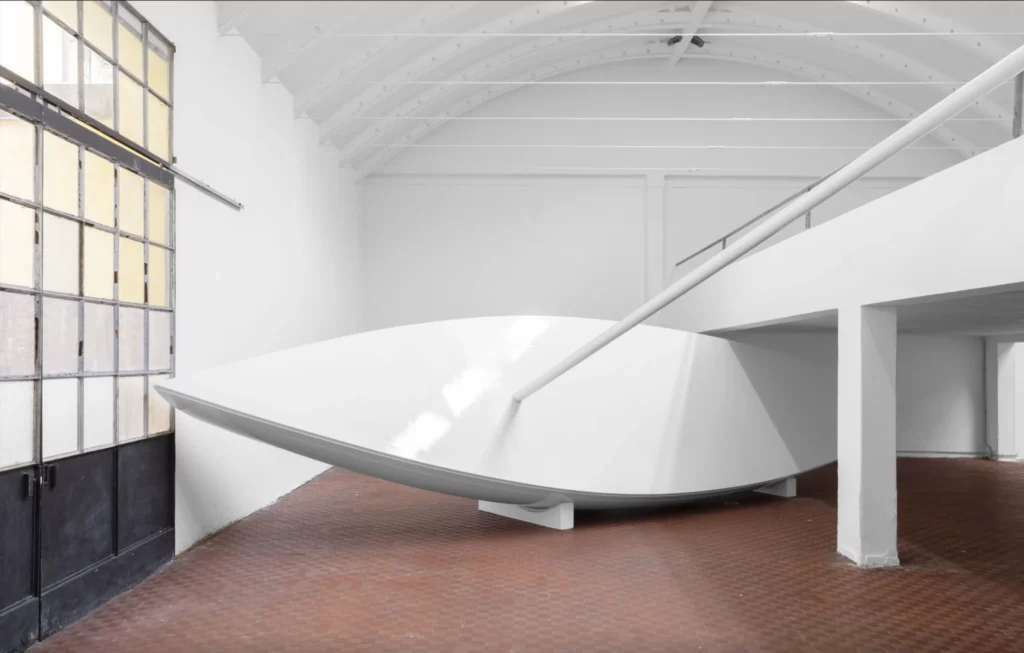
miArt does not exist in isolation. It is the beating heart of Milano Art Week, which in 2026 runs from April 13–19 — transforming the entire city into a distributed exhibition. During Milano Art Week 2026, public institutions, private foundations, commercial galleries, and unconventional spaces all open new shows, stage performances, and host conversations that make it impossible to walk a block without encountering art.
The institutional heavyweights pull out their finest. Fondazione Prada, in its Rem Koolhaas-designed campus in Largo Isarco, invariably unveils a major new exhibition timed to the week. Pirelli HangarBicocca, the vast former industrial space in Milan’s north, offers the kind of monumental installations that make you forget you are in a city at all. Triennale Milano, Italy’s design museum in Parco Sempione, bridges the art and design worlds with characteristic Milanese elegance. And Palazzo Reale, adjacent to the Duomo, lends a historical gravitas to whatever it chooses to show.
The fair’s celebrated “Talks Among Friends” program returns, offering intimate conversations between artists, curators, collectors, and critics — the kind of unscripted exchanges where genuine insight happens. These are not panels with microphones and name cards; they are the art world equivalent of a late-night jazz session, where the best ideas emerge when the formalities fall away.
For those with the stamina and the calendar space, the timing is extraordinary. Milano Art Week concludes on April 19, and Salone del Mobile — the world’s largest furniture and design fair — opens just two days later, on April 21. A ten-day stay in Milan from mid- to late April offers an unbroken immersion in art, architecture, and design that no other city on earth can match.

The decision to relocate miArt to the South Wing of Allianz MiCo is more than a logistical upgrade. It is a statement about where Milan’s cultural center of gravity is shifting.
Designed by Mario Bellini, one of Italy’s most celebrated architects and an eight-time Compasso d’Oro winner, the South Wing is a cathedral of glass and light. Three levels are connected by tapered foyers that pour natural light across the exhibition spaces. On the rooftop, Bellini’s iconic sculpture The Comet — eight thousand reflective aluminium filaments radiating from a dense nucleus — catches every sunrise, cloud formation, and sunset, turning the building itself into a kinetic artwork. From the upper-floor VIP Restaurant, the view stretches across the three towers of CityLife — a skyline that did not exist fifteen years ago.
CityLife is Milan’s most contemporary neighborhood, a district built on the former fairgrounds that has rapidly become the city’s architectural showcase. The Isozaki Tower, the Hadid Tower, and the Libeskind Tower — nicknamed Il Dritto, Lo Storto, and Il Curvo (the Straight, the Twisted, and the Curved) — form a trio of skyscrapers that would be landmarks in any global city. At their feet, the CityLife Shopping District, Italy’s largest urban shopping centre, offers more than 100 stores and 23 restaurants. The surrounding CityLife Park provides the green counterpoint — a place to decompress between gallery visits with a passeggiata beneath the oaks.
For collectors and art professionals, there is also a quietly compelling fiscal advantage: Italy applies a 5% VAT on art purchases, the lowest rate in the European Union. Combined with Milan’s position as a global design capital and its direct flight connections to virtually every major city, the CityLife art fair venue positions miArt as a serious competitor to Basel, Frieze, and Art Basel Paris.
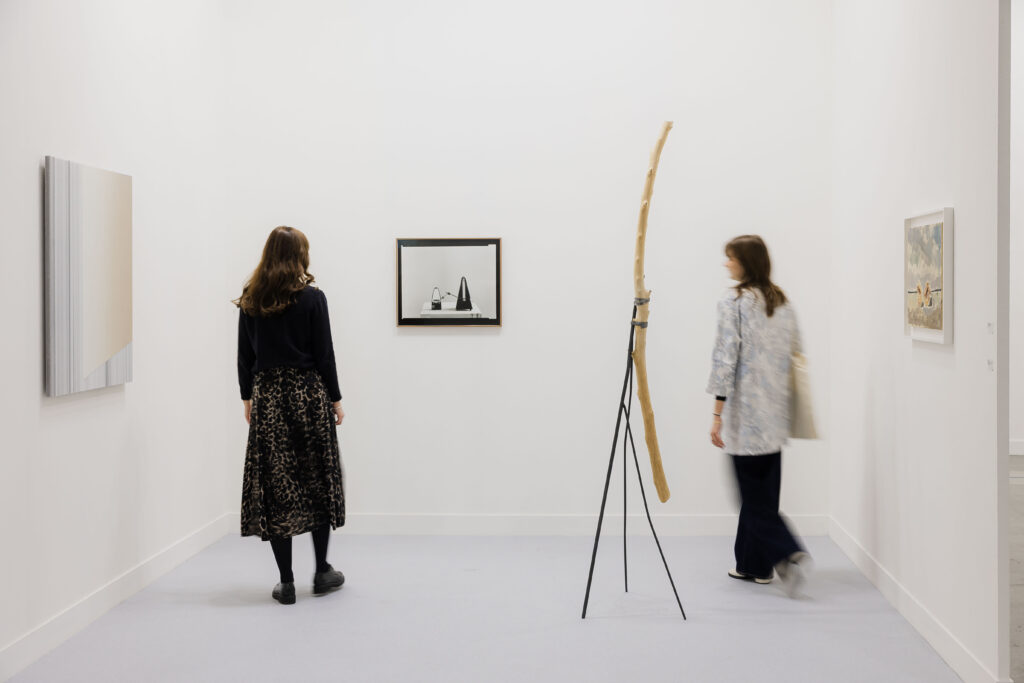
Dates and access. The VIP preview takes place on Wednesday, April 16, with general admission running Thursday, April 17 through Saturday, April 19. Serious collectors should aim for VIP day — the best works move fast, and the atmosphere is electric but unhurried. Tickets and VIP accreditation are available through the official miArt website.
Getting there. Allianz MiCo‘s South Wing is served by Metro Line 5 (the lilac line), with stops at Portello and Tre Torri both within a five-minute walk. From Milano Malpensa airport, the Malpensa Express train reaches Cadorna station in under 50 minutes, connecting directly to Line 5. From Milano Linate, the M4 blue line reaches the city centre in twenty minutes.
What to wear. This is Milan. The art world here dresses with the same intention it brings to curating — considered, personal, quietly confident. Think architectural silhouettes, intelligent layering, comfortable shoes that still make a statement. April in Milan averages 16–18°C, with occasional rain: bring a beautiful jacket.
Gallery etiquette. Engage with the gallerists — they are curators in their own right and often the best guides to the work they present. Ask questions. Take your time. If something moves you, say so. The art fair can feel transactional from the outside, but the best encounters at miArt New Directions will be human ones.
The bigger picture. The true luxury of visiting Milan in mid-April is the opportunity to weave together three of the world’s great cultural events. Begin with Milano Art Week from April 13, attend miArt from April 16–19, then extend your stay for Salone del Mobile from April 21–26. Ten days, three world-class events, one extraordinary city.
Private experiences. For those who prefer a curated, intimate approach to the city, Gold Black Style’s private Milan tours offer insider access to galleries, private collections, and cultural landmarks beyond the fair. Combine art with a private shopping experience in the Quadrilatero della Moda, and Milan reveals itself not as a destination but as a way of seeing.
What is miArt and when does it take place in 2026?
miArt is Milan’s international modern and contemporary art fair. The 2026 edition, titled New Directions, runs from April 17–19, with a VIP preview on April 16, at the South Wing of Allianz MiCo.
How many galleries participate in miArt 2026?
The 30th anniversary edition features 160 galleries from 24 countries, organized across five sections: Established, Established Anthology, Emergent, Movements, and Interplay.
What is new about miArt 2026 compared to previous editions?
miArt 2026 introduces two new sections — Movements (artist film and moving image, in partnership with the St. Moritz Art Film Festival) and Interplay (collaborative presentations between paired galleries). The fair also moves to a new venue, the South Wing of Allianz MiCo in the CityLife district.
What is Milano Art Week and how does it relate to miArt?
Milano Art Week runs April 13–19, 2026, and is a city-wide program of exhibitions, performances, and events at institutions including Fondazione Prada, Pirelli HangarBicocca, Triennale Milano, and Palazzo Reale. miArt is the central event of the week.
Where is miArt 2026 held and how do I get there?
miArt 2026 takes place at the South Wing of Allianz MiCo in Milan’s CityLife district. The nearest Metro stations are Portello and Tre Torri on Line 5 (lilac line), both a short walk from the entrance.
Is it worth combining miArt with Salone del Mobile?
Absolutely. Salone del Mobile opens April 21, just two days after miArt closes. Together with Milano Art Week, this creates an unparalleled ten-day cultural immersion in art, architecture, and design.
What is the VAT rate on art purchases in Italy?
Italy applies a 5% VAT on art, the lowest in the European Union, making miArt an attractive fair for international collectors.
VIP Milan shopping experience with personal stylist. Explore luxury boutiques, hidden ateliers & fashion district…
Discover More →
Family-friendly Milan walking tour from La Scala to Sforza Castle. Discover landmarks, stories & secrets…
Discover More →
Milan food market tour with Italian breakfast, espresso tasting & traditional aperitivo. Experience authentic Milanese…
Discover More →
Skip-the-line Milan Duomo tour with rooftop terrace access. Explore Gothic architecture & enjoy panoramic city…
Discover More →